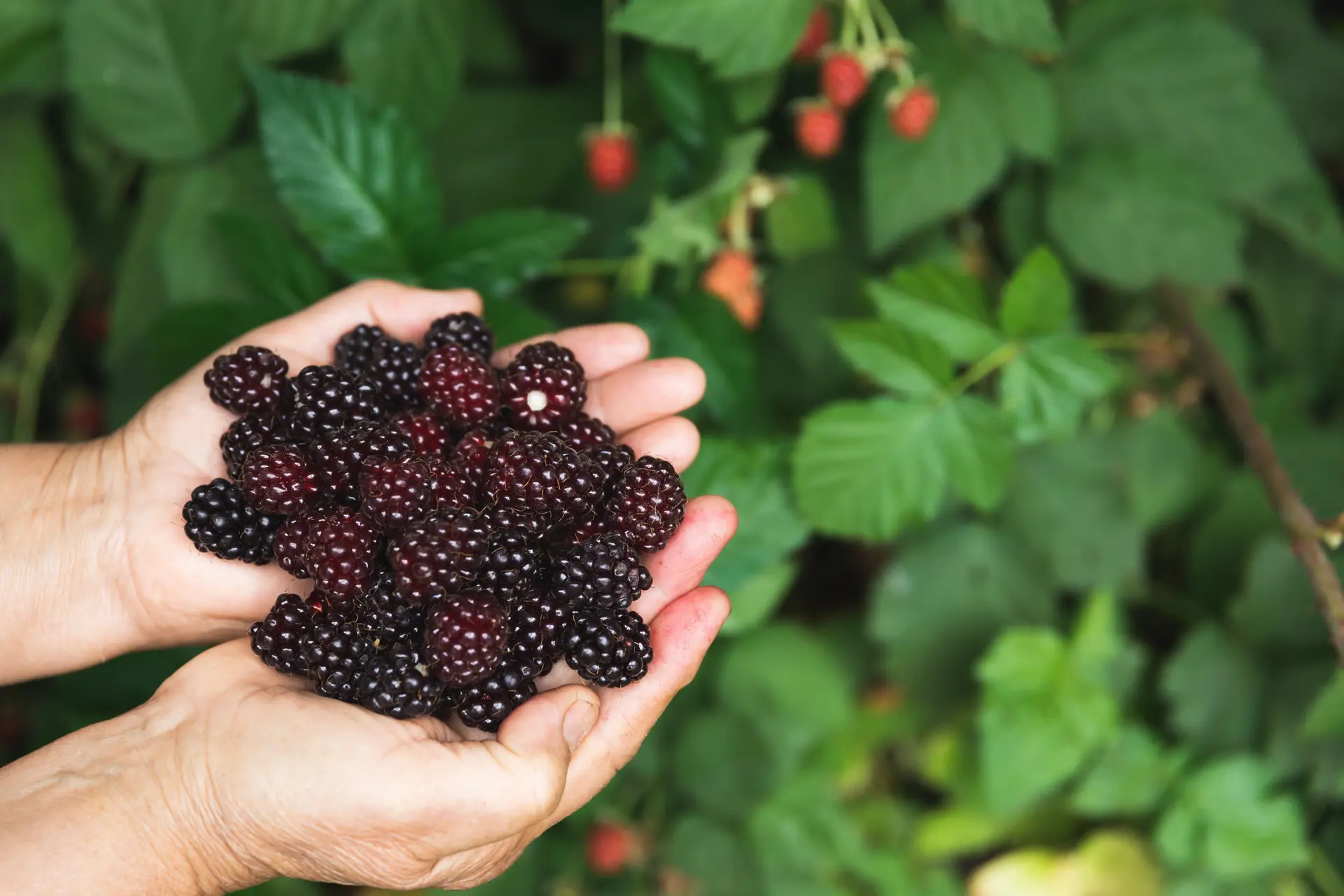
Can Chickens Eat Blackberries? Berries, Leaves, and Canes
Chickens can eat blackberries, the lowest-sugar berry a flock gets. Leaves and canes, purple droppings, frozen and wild berries, and how many to feed.
Researched from university extension, USDA, and veterinary sources. How we research.
Yes, chickens can eat blackberries, and of all the berries a flock gets, blackberries are the one you can be most relaxed about. They are the lowest in sugar of the common berries, the highest in fiber, and nothing on the plant is toxic to poultry: not the fruit, the seeds, the leaves, or the canes. Ranging chickens eat wild blackberries off the bramble every summer, which is how a lot of keepers first learn their hens like them.
This guide covers what blackberries offer, the leaves and canes, the purple droppings, frozen and wild berries, how many to feed, chicks, and raspberries, which follow the same rules.
Are Blackberries Safe for Chickens?
Yes. Blackberries are not on the University of Florida's extension list of foods never to feed chickens, and they belong to the rose family with raspberries, strawberries, and apples. The seeds are tiny and carry none of the cyanide compounds in apple seeds and stone-fruit pits. Wild blackberries and dewberries are the same fruit and just as safe.
What Is in a Blackberry
USDA figures for raw blackberries put 100 grams at about 88 percent water, under 5 grams of sugar, over 5 grams of fiber, about 1.4 grams of protein, and useful amounts of vitamin C, vitamin K, calcium, and potassium. Compared with the other fruits a flock gets:
- •Less sugar than any common berry, and less than a third of what is in grapes.
- •More fiber than any of them, mostly from the seeds, which pass through and keep the crop moving.
- •A little protein and calcium, unusual for a fruit, though not enough to count toward a layer's needs.
That profile is why blackberries can be a more regular fruit treat than grapes or bananas. They are still a treat: a hen full of berries is a hen eating less layer feed.
Blackberry Leaves and Canes
The leaves are safe and are a traditional forage; ranging chickens nibble young blackberry leaves and the new shoots in spring. The canes are woody, thorny, and nothing a hen will eat, but a bramble thicket is one of the best places a free-range flock can spend a day: shade, cover from hawks, bugs underneath, and berries at head height in July. A flock will not damage an established bramble the way it damages a strawberry bed.
The one caution is spray. Cultivated blackberries are often treated for spotted-wing drosophila and cane diseases. If your patch has been sprayed, keep the flock out until the label's re-entry interval has passed.
Why the Droppings Turn Purple
Blackberry pigments pass straight through, and the morning after a berry treat the run is full of dark purple droppings. It looks like blood to a new keeper; it is the berries, and it clears in a day. Blueberries and beets do the same.
Fresh, Frozen, and Wild Blackberries
Fresh berries, rinsed, are the standard. Overripe is fine; moldy or fermenting is not, since both mold and fermented food are on the extension never list, and blackberries mold fast in a container.
Frozen blackberries are fine, plain, and make a cooling summer treat straight from the freezer. Skip anything packed in syrup.
Wild blackberries are the same fruit. Let the flock glean them off the bramble; the only berries to keep them from are ones on roadside brambles that may have been sprayed.
How Many Blackberries Can Chickens Eat?
Five or six berries per standard hen, a few times a week, is comfortable, and because the sugar is low you do not have to be strict about it. Scatter them so every hen gets some. The extension guideline for all treats combined is no more than the flock finishes in about 20 minutes, and berries go faster than that, so the per-bird count is the working limit.
Too much shows up as loose droppings beyond the purple and hens skipping feed.
Can Baby Chicks Eat Blackberries?
After the first couple of weeks on starter feed, a blackberry broken into pieces is a fine first fruit: soft, low in sugar, and easy to peck. Have chick grit in the brooder and keep it to a berry per chick. See the brooder setup guide.
Raspberries and Mulberries
Same family, same rules. Raspberries are a little sweeter and softer; mulberries drop from the tree in quantity in early summer and a flock under a mulberry tree will gorge, so limit access if the droppings get loose. All three are safe in every part.
Keeping Chickens Off the Blackberry Patch
Unlike a strawberry bed, a blackberry planting mostly survives a flock; the damage is lost fruit. If you want the berries, net the rows during picking season with fine mesh tied at the base, as extension guidance for berry plantings recommends, or fence the patch; heavy breeds stay behind a 4-foot fence and light breeds do not. Let the hens in after the last pick to clean up drops and the fruit-fly larvae in them, which is genuinely useful.
Blackberries vs Other Fruit Treats
| Fruit | Water | Sugar per 100 g | Fiber | Notes |
|---|---|---|---|---|
| Blackberries | 88 percent | Under 5 g | 5.3 g | Lowest sugar, most fiber |
| Strawberries | 91 percent | About 5 g | 2 g | Halve for bantams |
| Blueberries | 84 percent | About 10 g | 2.4 g | Whole, no prep |
| Watermelon | 91 percent | About 6 g | Under 1 g | Best for heat |
| Grapes | 80 percent | About 16 g | Under 1 g | Halve for small birds |
Frequently Asked Questions
Are blackberries good for chickens?
They are the best of the common berries for a flock: lowest in sugar, highest in fiber, with a little protein and calcium. Still a treat, not feed.
Can chickens eat blackberry leaves?
Yes. Young leaves and shoots are a traditional forage, and a bramble makes good cover for a ranging flock. Keep birds off sprayed canes until the label interval passes.
Can chickens eat wild blackberries?
Yes, the same fruit. Avoid roadside brambles that may have been sprayed.
Why are my chickens' droppings purple?
Berry pigments pass through. Purple droppings the morning after blackberries are normal and clear in a day.
Can chickens eat raspberries?
Yes, same family and same rules, a little sweeter than blackberries.
How many blackberries can chickens eat?
Five or six per hen a few times a week, scattered. The low sugar means a few extra will not hurt.
Bottom Line
Blackberries are safe in every part and the most forgiving berry you can feed: low sugar, high fiber, and free off the bramble in July. Scatter a handful, expect purple droppings, and net the rows if you want a pie. For the full list of what chickens can and cannot eat, see what can chickens eat.
Sources:
- •USDA FoodData Central. Blackberries, raw (SR Legacy, FDC ID 173946). https://fdc.nal.usda.gov/food-details/173946/nutrients
- •Ask Extension. Protect blueberry bushes from birds without birds getting stuck in netting (fine mesh, tie netting at the base, frame for rows). https://ask.extension.org/kb/faq.php?id=743593
- •UF/IFAS Extension Holmes County. 10 Foods You Should Never Feed Chickens (moldy and fermented food; blackberries are not on the list). https://blogs.ifas.ufl.edu/holmesco/?p=28475
- •Poultry Extension (eXtension). Feeding Chickens for Egg Production in Small and Backyard Flocks (the 20-minute rule for scraps). https://poultry.extension.org/articles/feeds-and-feeding-of-poultry/feeding-chickens-for-egg-production/
Related Guides
Can Chickens Eat Strawberries? Berries, Tops, and Leaves
Chickens can eat strawberries, tops and leaves included. What the berries offer, how many to feed, moldy fruit to avoid, and keeping hens out of the patch.
Feed & NutritionCan Chickens Eat Broccoli? Stems, Leaves, Raw or Cooked
Chickens can eat broccoli, raw or cooked, florets to stems. What the goitrogen worry actually amounts to, why a hanging head beats a pile, and how much to feed.
Feed & NutritionCan Chickens Eat Apples? Yes, But Core Them First
Chickens can eat apples, skin and all, but the seeds carry amygdalin, which releases cyanide. How much a hen would need to eat, how to feed apples, and cores.
Feed & NutritionCan Chickens Eat Avocado? No, and Here Is the Evidence
Chickens cannot safely eat avocado. Persin in the skin, pit, leaves, and flesh damages the heart in birds. What Merck and the case reports say, and what to do.