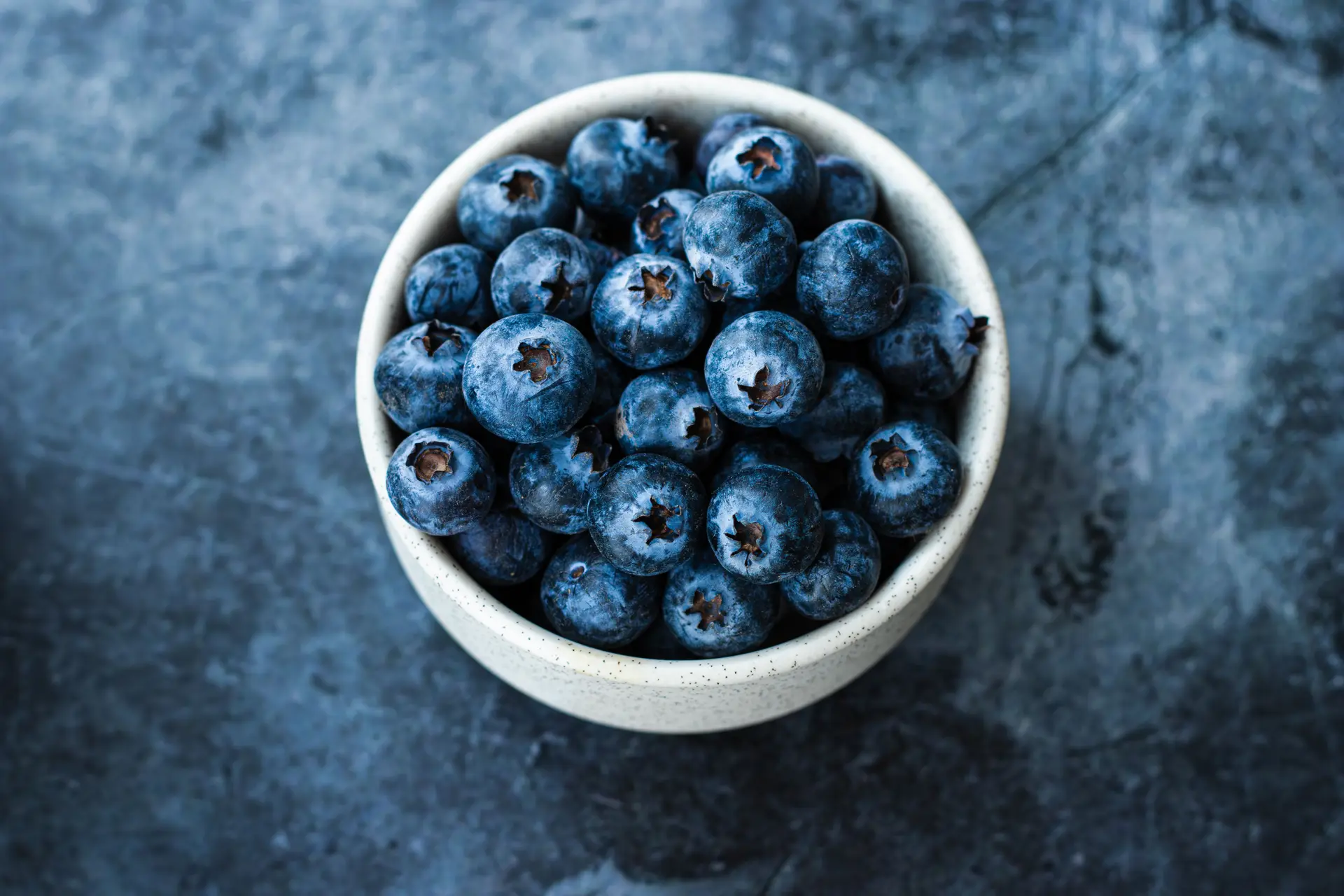
Can Chickens Eat Blueberries? Fresh, Frozen, and Dried
Chickens can eat blueberries, and most flocks love them. What they offer, why the droppings turn purple, frozen and dried berries, how many to feed, and chicks.
Researched from university extension, USDA, and veterinary sources. How we research.
Yes, chickens can eat blueberries, and there are few treats a flock reacts to faster. A blueberry is small enough for any hen to swallow whole, soft enough for a chick, and sweet enough that a handful tossed into the run starts a chase. Nothing about a blueberry is toxic to poultry: not the fruit, not the skin, not the tiny seeds, and not the leaves of the bush. The only rules are the ones that apply to every fruit, which come down to sugar and quantity, plus one practical note about dried berries.
This guide covers what blueberries offer a hen, the purple droppings they cause, fresh versus frozen versus dried, how many to feed, chicks, and protecting your bushes from a flock that has discovered them.
Are Blueberries Safe for Chickens?
Yes. Blueberries are not on the University of Florida's extension list of foods never to feed chickens, and the plant belongs to the heath family with cranberries and huckleberries, none of which carry a poultry toxin. Wild blueberries and huckleberries that ranging chickens find are safe as well.
What Is in a Blueberry
USDA figures for raw blueberries put 100 grams at about 84 percent water, roughly 10 grams of sugar, 2.4 grams of fiber, and small amounts of vitamin C, vitamin K, and potassium. That is more sugar than strawberries and less than grapes, which puts blueberries in the middle of the fruit range: a treat, not a daily staple, but not one you have to count by the berry. The fiber is worth having. The antioxidants that make blueberries a health food for people have no established benefit for chickens, so feed them because the hens like them, not as medicine.
Why the Droppings Turn Purple
The blue and purple pigments in blueberry skins pass straight through a chicken. A flock that ate blueberries in the afternoon leaves dark purple or blue-black droppings the next morning, sometimes alarming enough that keepers search for a disease. It is the berries. The same thing happens with blackberries and beets, and it clears in a day.
Fresh, Frozen, and Dried Blueberries
Fresh is the standard, whole and rinsed. Slightly soft berries are fine; moldy or split, fermenting berries are not, because moldy food and fermented food are both on the extension never list.
Frozen blueberries are excellent, and frozen is often cheaper than fresh out of season. Toss them frozen into the run in summer for a cold treat, or thaw them for chicks. Plain frozen only, not the kind packed in syrup.
Dried blueberries are where the sugar rule bites. USDA lists sweetened dried blueberries at about 68 grams of sugar per 100 grams, nearly seven times the fresh fruit, because the water is gone and sugar has usually been added. A few dried berries per hen is a treat; a handful is a sugar bomb, and they swell in the crop. Fresh or frozen is the better choice whenever you have them.
How Many Blueberries Can Chickens Eat?
A small handful scattered for a flock of six, a few times a week, is plenty, which works out to five or six berries per standard hen. Bantams get half that. The extension guideline for all treats combined is no more than the flock finishes in about 20 minutes, and blueberries vanish in two, so the per-bird count is the limit.
Scatter rather than pile: a pile means one dominant hen guarding it while the others go without, and a scatter means everyone gets a few and the whole flock gets ten minutes of foraging out of it.
Signs of too much are the usual ones: loose droppings beyond the purple, hens ignoring their feed, and fewer eggs over a couple of weeks as treats displace layer ration.
Can Baby Chicks Eat Blueberries?
After the first couple of weeks on starter feed, a blueberry cut in half is a fine first fruit for chicks: soft, small, and moderate in sugar. Have chick grit in the brooder from the first day treats appear, and keep it to a berry or two per chick so they still eat starter. See the brooder setup guide.
Keeping Chickens Out of the Blueberry Bushes
A flock that finds a blueberry bush strips every berry it can reach, and blueberries ripen at chicken height. Options that work:
- •Net the bushes. The same bird netting that keeps robins off keeps hens off. Extension advice for berry plantings is to use fine mesh, tie the netting closed at the base so nothing walks in underneath, and, for a row of bushes, build a simple frame to hang it from so it goes up once a season.
- •Fence the patch. A 4-foot fence stops heavy breeds; Leghorns and bantams will fly it. See can chickens fly.
- •Time it. Keep the flock out from first color to last pick, then let them in to clean up drops and bugs.
Chickens do help a blueberry patch outside the picking window: they eat the larvae and beetles that overwinter in the mulch.
Blueberries vs Other Berries
| Fruit | Water | Sugar per 100 g | Fiber | Notes |
|---|---|---|---|---|
| Blueberries | 84 percent | About 10 g | 2.4 g | Whole, no prep |
| Blackberries | 88 percent | About 5 g | 5.3 g | Lowest sugar, most fiber |
| Strawberries | 91 percent | About 5 g | 2 g | Halve for bantams |
| Grapes | 80 percent | About 16 g | Under 1 g | Halve for small birds |
| Dried blueberries, sweetened | 15 percent | About 68 g | 7.5 g | A few per hen at most |
Raspberries and mulberries follow the same rules as blackberries.
Frequently Asked Questions
Are blueberries good for chickens?
They are a safe, moderately sugary fruit treat with useful fiber. They add no nutrition a complete feed lacks, so feed them for the enrichment rather than for health.
Can chickens eat frozen blueberries?
Yes, plain frozen berries are fine, and frozen in summer they double as a cooling treat.
Can chickens eat dried blueberries?
A few. Sweetened dried blueberries are about 68 percent sugar, so two or three per hen is the limit.
Why are my chickens' droppings purple after blueberries?
The skin pigments pass through undigested. Purple or blue-black droppings the morning after berries are normal and clear within a day.
How many blueberries can chickens eat?
Five or six per standard hen a few times a week, scattered so everyone gets some.
Can baby chicks eat blueberries?
After two weeks or so on starter, halved berries with chick grit available, a berry or two per chick.
Bottom Line
Blueberries are safe, loved, and easy: rinse, scatter, and expect purple droppings in the morning. Go light on dried berries and net the bushes if you want any for yourself. For the full list of what chickens can and cannot eat, see what can chickens eat.
Sources:
- •USDA FoodData Central. Blueberries, raw (SR Legacy, FDC ID 171711); Blueberries, dried, sweetened (168158). https://fdc.nal.usda.gov/food-details/171711/nutrients
- •Ask Extension. Protect blueberry bushes from birds without birds getting stuck in netting (fine mesh, tie netting at the base, frame for rows). https://ask.extension.org/kb/faq.php?id=743593
- •UF/IFAS Extension Holmes County. 10 Foods You Should Never Feed Chickens (moldy and fermented food; blueberries are not on the list). https://blogs.ifas.ufl.edu/holmesco/?p=28475
- •Poultry Extension (eXtension). Feeding Chickens for Egg Production in Small and Backyard Flocks (the 20-minute rule for scraps). https://poultry.extension.org/articles/feeds-and-feeding-of-poultry/feeding-chickens-for-egg-production/
Related Guides
Can Chickens Eat Apples? Yes, But Core Them First
Chickens can eat apples, skin and all, but the seeds carry amygdalin, which releases cyanide. How much a hen would need to eat, how to feed apples, and cores.
Feed & NutritionCan Chickens Eat Avocado? No, and Here Is the Evidence
Chickens cannot safely eat avocado. Persin in the skin, pit, leaves, and flesh damages the heart in birds. What Merck and the case reports say, and what to do.
Feed & NutritionCan Chickens Eat Bell Peppers? Fruit Yes, Plant No
Chickens can eat bell peppers, seeds and all. The plant is a nightshade, so leaves and stems stay off the menu. Hot peppers, colors, how much, and chicks.
Feed & NutritionCan Chickens Eat Blackberries? Berries, Leaves, and Canes
Chickens can eat blackberries, the lowest-sugar berry a flock gets. Leaves and canes, purple droppings, frozen and wild berries, and how many to feed.