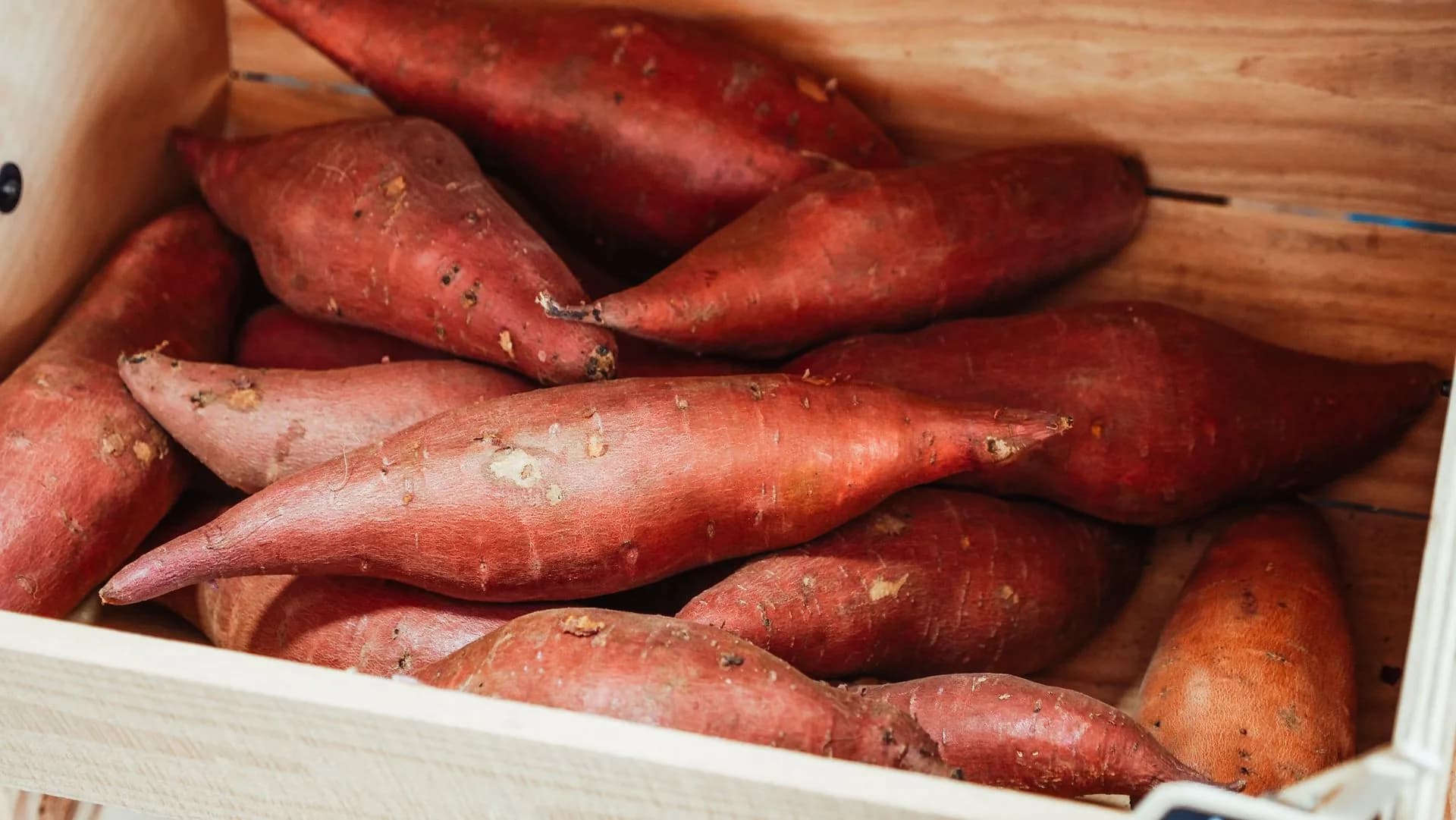
Can Chickens Eat Sweet Potatoes? Skins and Vines Too
Chickens can eat sweet potatoes raw or cooked, skins and vines and all. No solanine like regular potatoes. The holiday-leftover catch and how much to feed.
Researched from university extension, USDA, and veterinary sources. How we research.
Yes, chickens can eat sweet potatoes, and unlike regular potatoes there is almost nothing to worry about. Raw or cooked, flesh and skin, even the vines and leaves off the plant: all of it is safe for a flock, and most hens go after cooked sweet potato the way they go after warm oatmeal on a cold morning. There is no toxin to dodge and no part you have to throw out.
The one catch is not the sweet potato itself but what we put on it. The candied, buttered, marshmallow-topped version that lands on the Thanksgiving table is not chicken food, and that is the single mistake worth heading off this time of year. This guide covers why sweet potatoes are safer than their nightshade cousins, raw versus cooked, the skins and the vines, what to do with holiday leftovers, and how much a flock should actually get.
What You'll Learn
- •Are Sweet Potatoes Safe for Chickens?
- •Sweet Potatoes vs Regular Potatoes
- •What Sweet Potatoes Offer Your Flock
- •Can Chickens Eat Raw Sweet Potato?
- •Cooked Sweet Potato
- •Can Chickens Eat Sweet Potato Skins?
- •Sweet Potato Vines and Leaves
- •Holiday Leftovers: What to Skip
- •Do Sweet Potatoes Deepen Egg Yolks?
- •How Much Sweet Potato Can Chickens Eat?
- •Can Baby Chicks Eat Sweet Potato?
- •Sweet Potato vs Other Fall Treats
- •Common Mistakes
- •Frequently Asked Questions
Are Sweet Potatoes Safe for Chickens?
Yes, and more plainly than almost any other garden vegetable. A sweet potato is the tuber of Ipomoea batatas, a trailing vine in the morning glory family. It is not a nightshade, and that one fact clears away most of the worry that hangs over its look-alike. There is no solanine in a sweet potato, no green-skin warning to watch for, and no part of the plant you have to keep away from the flock.
That puts sweet potato on the short list of foods that are safe in every ordinary form. You can hand a hen a raw chunk, a baked half, a spoon of plain mash, or a handful of peels, and none of it carries a toxin. The questions that remain are the same gentle ones that apply to any treat: how it is best prepared, and how much. Nothing about safety is in doubt.
Sweet Potatoes vs Regular Potatoes
This is the comparison worth getting straight, because the two sit side by side in the kitchen and get lumped together, when for a chicken they could hardly be more different.
A regular potato is a nightshade, the same family as tomatoes and eggplant, and it makes glycoalkaloids called solanine and chaconine as a pest defense. Those rise in green skins, in sprouts, and in damaged tubers, which is why our guide to feeding chickens potatoes comes with two firm rules: cook it, and never feed a green or sprouted one. Raw potato is a double problem, both for the solanine and because raw potato starch barely digests.
A sweet potato has none of that baggage. It is in a different plant family entirely, it makes no solanine, and there is no green-skin trap to learn. Raw sweet potato is safe where raw regular potato is not. The whole plant is edible where the potato plant's leaves and stems are toxic. If you only remember one thing, remember that sweet potatoes skip every rule that makes regular potatoes a careful food. They are the easier, and frankly the better, vegetable to share with a flock.
What Sweet Potatoes Offer Your Flock
Sweet potato is a real nutritional step up from a plain starchy scrap, even though it is still a treat rather than a feed. USDA figures put 100 grams of raw sweet potato at about 86 calories, roughly 77 percent water, 20 grams of carbohydrate with about 4 grams of that as natural sugar, 1.6 grams of protein, and 3 grams of fiber. The headline number is the beta-carotene: around 8,500 micrograms per 100 grams, which the bird's body turns into vitamin A, and which lands sweet potato in the same deep-orange company as carrots and pumpkin.
Here is the honest shape of it:
- •Good energy and fiber. The starch is useful fuel, especially in cold weather, and the fiber supports healthy digestion in a way plain grain does not.
- •Rich in beta-carotene and vitamin A. This is the standout. Vitamin A supports eye, skin, and immune health, and it is the pigment that deepens yolk color.
- •Decent potassium, light on calcium. Sweet potato brings a fair amount of potassium but very little calcium, so like every treat it cannot stand in for a laying hen's calcium source.
- •Low in protein. At under 2 grams per 100 grams, sweet potato does not carry the protein a hen needs to lay, which is exactly why it rounds out the diet instead of running it.
So the frame is the familiar one. Sweet potato is a nutrient-dense treat, better than most, but it still sits on top of a balanced layer feed rather than replacing any of it.
Can Chickens Eat Raw Sweet Potato?
Yes. This is the point that trips people up, because they have heard, correctly, that raw regular potato is a bad idea, and they carry the warning over to the wrong vegetable. Raw sweet potato is safe. There is no solanine to worry about, and a hen can digest it.
The only real issue with raw sweet potato is texture. A whole raw tuber is hard and dense, and a chicken has no teeth to break it down, so a hen left to peck a raw sweet potato will chip away at it slowly and may lose interest. The fix is simple: grate it, or cut it into thin pieces, and it goes down much easier. Many keepers just halve a raw one and set it in the run as a slow pecking project, which doubles as a boredom buster on a penned-up winter day.
Keep grit available whenever you feed raw, whole foods. A hen grinds everything in her gizzard with the grit she has swallowed, and raw sweet potato is firm enough to need it. Our grit and oyster shell guide covers why that matters for anything beyond crumble or pellets. One minor note for the sticklers: raw sweet potato, like many raw vegetables, contains small amounts of natural compounds called trypsin inhibitors and oxalates. In the tablespoon-sized amounts a hen gets as a treat, they do not matter, and cooking reduces them further. There is no need to avoid raw sweet potato over it.
Cooked Sweet Potato
Cooked is where sweet potato really shines as a flock treat, and it is the form most hens prefer. Baked, boiled, steamed, or roasted plain, with nothing on it, cooked sweet potato is soft, warm, easy to digest, and packed with the same beta-carotene it started with. On a cold morning a bowl of mashed sweet potato is one of the most welcome things you can carry out to the run.
The rule for cooking is the same as for any kitchen scrap: plain only. No butter, no salt, no brown sugar, no oil. Those are the problem, not the sweet potato under them. Boil or bake a spare one, let it cool to lukewarm, and mash or chop it. Cooking also softens the skin, so a baked sweet potato can go out whole, flesh and skin together, and the flock will clean it to the peel. Leftover plain roasted sweet potato from your own dinner is fine as long as it was not cooked in a pool of butter or dusted with salt.
Cooked sweet potato is a particularly good cold-weather treat because it delivers easy calories when hens are burning more energy to stay warm. Pair it with their normal full feed and a dry, draft-free coop, which is what actually keeps a flock comfortable through winter. Our winter chicken care guide and fall chicken care guide walk through the rest of cold-season care.
Can Chickens Eat Sweet Potato Skins?
Yes, the skins are safe and among the more nutritious parts. Sweet potato skin holds a good share of the fiber and nutrients, and there is no need to peel for the flock the way you might for a dinner recipe. Whether raw and grated or baked soft and whole, the skin can go to the hens along with the flesh.
The only sensible step is a quick wash. Store-bought sweet potatoes can carry soil and field residue, and a rinse handles that. If you grow your own and spray nothing, a scrub under the tap is plenty. Trim off any soft, moldy, or rotten spots, which is standard practice for any produce going to the flock: it is the mold, not the sweet potato, you are avoiding.
Sweet Potato Vines and Leaves
Here is a bonus the regular potato cannot offer. The entire sweet potato plant is edible, vines and leaves included. Sweet potato greens are a common cooked vegetable across much of Asia and Africa, which tells you they are a long way from toxic, and a ranging flock will happily strip the leafy vines.
This is the sharpest line between the two plants. The leaves and stems of a regular potato plant are part of the nightshade and carry the same glycoalkaloids as a green tuber, so you keep chickens out of the potato patch. The sweet potato patch is the opposite: if the vines are sprawling and you are trimming them back anyway, toss the cuttings over the fence. Free-range birds often find the bed on their own and nibble the leaves without any harm. It is one of the tidier ways to turn garden trimmings into flock feed.
Holiday Leftovers: What to Skip
Sweet potatoes show up on the table in late fall in their least chicken-friendly form, so this is worth spelling out. The candied yams, the sweet potato casserole crowned with marshmallows, the mash loaded with butter and brown sugar: none of that belongs in the run. The sweet potato underneath is fine. The sugar, butter, salt, and marshmallow piled on it are the trouble.
Chickens handle salt poorly, and a heavily sweetened, buttered dish is both salty and sugary. A few stray bits will not poison a hen, but a bowl of leftover casserole scraped out to the flock is the kind of thing that leads to loose droppings and, over time, hens eating junk instead of feed. If you want to share the holiday with the flock, set aside a plain piece before it gets dressed up, bake or boil it with nothing on it, and give them that. They will be just as pleased, and you will skip the mess. For the wider view of what is safe and what is not, keep our what can chickens eat list handy through the season.
Do Sweet Potatoes Deepen Egg Yolks?
They can, and it is one of the nicer side effects of feeding them. The beta-carotene and related pigments in sweet potato, the same ones behind that deep orange color, are xanthophylls and carotenoids that a hen deposits into her yolks. Feed sweet potato, pumpkin, leafy greens, or yellow corn with any regularity and yolks trend toward a richer orange over the following weeks.
It is worth keeping this in perspective. Yolk color is a pigment effect, not a measure of how nutritious the egg is, and it builds gradually rather than overnight. But if you enjoy a deep-orange yolk, sweet potato is one of the foods that nudges it there, alongside carrots, pumpkin, and garden greens.
How Much Sweet Potato Can Chickens Eat?
The standard treat rule covers it: everything beyond a hen's balanced feed, sweet potato included, should add up to no more than about 10 percent of the daily diet. A practical way to picture it is a tablespoon or two of cooked or grated sweet potato per hen, a couple of times a week. In cold weather you can lean a little heavier on it for the calories, the way you would with any warming scrap.
The reason to hold the line is not toxicity, since there is none, but balance. Sweet potato is starchy and low in protein and calcium, so a flock that fills up on it eats less of the feed that actually carries what a laying hen needs. Overdo it and you see the same slow slide any treat causes when it crowds out the ration: softer droppings, thinner shells, and eventually fewer eggs. Keep it a treat, keep the layer feed in front of them all day, and sweet potato does nothing but good. Our guide to the best treats for chickens sets it alongside the rest of what a flock can safely be offered, and the complete feeding guide covers the balanced base it sits on top of.
Can Baby Chicks Eat Sweet Potato?
Hold off for the first few weeks. Chicks need the concentrated protein in a quality starter feed to grow well, and sweet potato is mostly starch, so an early treat just dilutes what they need most. Starter feed, and only starter feed, is the right call out of the brooder.
After three or four weeks, a small spoon of plain cooked, mashed sweet potato is a fine occasional treat, and chicks tend to love the soft texture. Keep the amount tiny, make sure chick grit is available so they can grind it, and go back to starter as the main meal. Our brooder setup guide covers what those early weeks should look like.
Sweet Potato vs Other Fall Treats
Sweet potato sits in a crowd of autumn scraps a flock sees this time of year. Here is how it stacks up against a few others.
| Treat | Standout | Raw OK? | Best use | Notes |
|---|---|---|---|---|
| Sweet potato | Beta-carotene, fiber | Yes (grate it) | Warm winter mash | Whole plant safe; skip butter and sugar |
| Regular potato | Energy | No | Cooked winter scrap | Cook it; never green or sprouted |
| Pumpkin | Fiber, seeds | Yes | Fall boredom buster | Flesh, seeds, and guts all safe |
| Carrots | Beta-carotene | Yes | Winter crunch | Grate or cook; pecked slowly raw |
| Corn | Energy | Yes | Afternoon scatter | A treat, not a feed; watch for mold |
None of these replace feed. They round out the day, give the flock something to work at, and in the amount hens will finish in a few minutes they do no harm.
Common Mistakes
- •Treating sweet potato like regular potato. The most common error, and it runs both ways: people cook sweet potato out of fear of raw, which is fine but unnecessary, or they worry about green skin, which is a nightshade problem sweet potatoes do not have.
- •Feeding the holiday casserole. Candied yams, marshmallow topping, and buttered, salted mash are the real hazard. Set a plain piece aside before it gets dressed up.
- •Skipping grit with raw pieces. Raw sweet potato is firm. Hens grind it in the gizzard with grit, so keep grit available for any flock eating whole foods.
- •Letting it crowd out feed. Sweet potato is low in protein and calcium. A flock that fills up on it lays worse. Keep all treats to about a tenth of the diet.
- •Feeding moldy or rotten tubers. As with any produce, the mold is the danger, not the sweet potato. Trim soft spots and throw out anything fuzzy or sour.
- •Peeling for the flock. No need. The washed skin is nutritious and safe, raw or cooked.
Frequently Asked Questions
Can chickens eat raw sweet potato?
Yes. Raw sweet potato is safe for chickens, with no solanine like a raw regular potato. The only issue is that a whole raw tuber is hard, so grate it or cut thin pieces, and keep grit available so hens can grind it.
Can chickens eat sweet potato skins?
Yes, the skins are safe and nutritious, raw or cooked. Give them a quick wash to remove soil and field residue, and feed them right along with the flesh. There is no reason to peel sweet potatoes for the flock.
Can chickens eat sweet potato vines and leaves?
Yes. The whole sweet potato plant is edible, unlike the toxic leaves of a regular potato plant. Sweet potato greens are eaten by people around the world, and ranging chickens will strip the vines. Toss trimmings over the fence.
Are sweet potatoes better for chickens than regular potatoes?
In most ways, yes. Sweet potatoes carry no solanine, can be fed raw, and come with an edible plant, while regular potatoes must be cooked and never fed green or sprouted. Sweet potato also brings more beta-carotene and fiber.
Can chickens eat cooked sweet potato?
Yes, and most hens prefer it. Bake, boil, or steam it plain, with no butter, salt, or sugar, let it cool, and mash or chop it. Cooked sweet potato is soft, easy to digest, and a good source of warm calories in winter.
Can chickens eat Thanksgiving sweet potatoes or candied yams?
Skip the dressed-up versions. The sweet potato itself is fine, but marshmallow, brown sugar, butter, and salt are not good for chickens. Set aside a plain piece before it is sweetened, cook it plain, and give them that instead.
Will sweet potatoes make my egg yolks more orange?
They can. The beta-carotene in sweet potato is a pigment hens deposit into yolks, deepening the color over a few weeks of regular feeding, much like pumpkin, carrots, and leafy greens. It changes color, not nutrition.
How much sweet potato can I feed my chickens?
Keep all treats, sweet potato included, to about 10 percent of the daily diet. For most flocks that is a tablespoon or two of cooked or grated sweet potato per hen, a couple of times a week, with a little more allowed in cold weather for the extra calories.
Bottom Line
Sweet potatoes are one of the easiest and most rewarding treats you can share with a flock. There is no toxin to dodge, no green-skin trap, and no part to throw away: raw or cooked, flesh and skin, vines and leaves, all of it is safe, and the beta-carotene makes it a genuine nutritional step up from a plain starchy scrap. The only real rule is to keep it plain, which matters most in late fall when sweet potatoes arrive buttered and sugared on the holiday table. Feed it as a treat at about a tenth of the diet, serve a warm mash on cold mornings, and let a balanced layer feed carry the protein and calcium. For the full picture of what belongs in a flock's diet, see what can chickens eat and our complete feeding guide.
Image credit: Sweet potatoes photo by Kindel Media, via Pexels.
Sources:
- •USDA FoodData Central. Sweet potato, raw, unprepared (water, sugar, protein, fiber, beta-carotene, and potassium figures). https://fdc.nal.usda.gov/
- •Jacob, J. Feeding Chickens for Egg Production in Small and Backyard Flocks. Poultry Extension (treats, the 90/10 balance, and scraps). https://poultry.extension.org/articles/feeds-and-feeding/feeding-chickens/
- •University of Florida IFAS Extension. Dooryard and garden plants toxic to poultry, and safe scraps (nightshade cautions that sweet potatoes avoid). https://edis.ifas.ufl.edu/
- •Merck Veterinary Manual. Nutrition in Poultry: Vitamins and the role of vitamin A. https://www.merckvetmanual.com/poultry/nutrition-and-management-poultry/vitamins-for-poultry
Related Guides
Can Chickens Eat Potatoes? Cooked Yes, Green or Raw No
Chickens can eat plain cooked potatoes. Green, sprouted, and raw ones are the problem: solanine, and starch that barely digests. Peels, sweet potatoes, amounts.
Feed & NutritionCan Chickens Eat Corn? Cob, Cracked, and the Myth
Chickens can eat corn: on the cob, cracked, sweet, or dried. The truth about the winter-warmth myth, why moldy corn is the real danger, and how much.
Feed & NutritionCan Chickens Eat Pumpkin? Seeds, Guts, and the Myth
Chickens can eat pumpkin, seeds and guts included. The truth about the pumpkin-seed dewormer claim, how to feed Halloween leftovers safely, and how much.
Feed & NutritionCan Chickens Eat Apples? Yes, But Core Them First
Chickens can eat apples, skin and all, but the seeds carry amygdalin, which releases cyanide. How much a hen would need to eat, how to feed apples, and cores.