Ayam Cemani Breed Guide: The All-Black Chicken (2026)
Ayam Cemani explained: the Indonesian breed that is black to the bone, the gene behind it, cream eggs, weights, temperament, prices, and what is myth.
Researched from university extension, USDA, and veterinary sources. How we research.
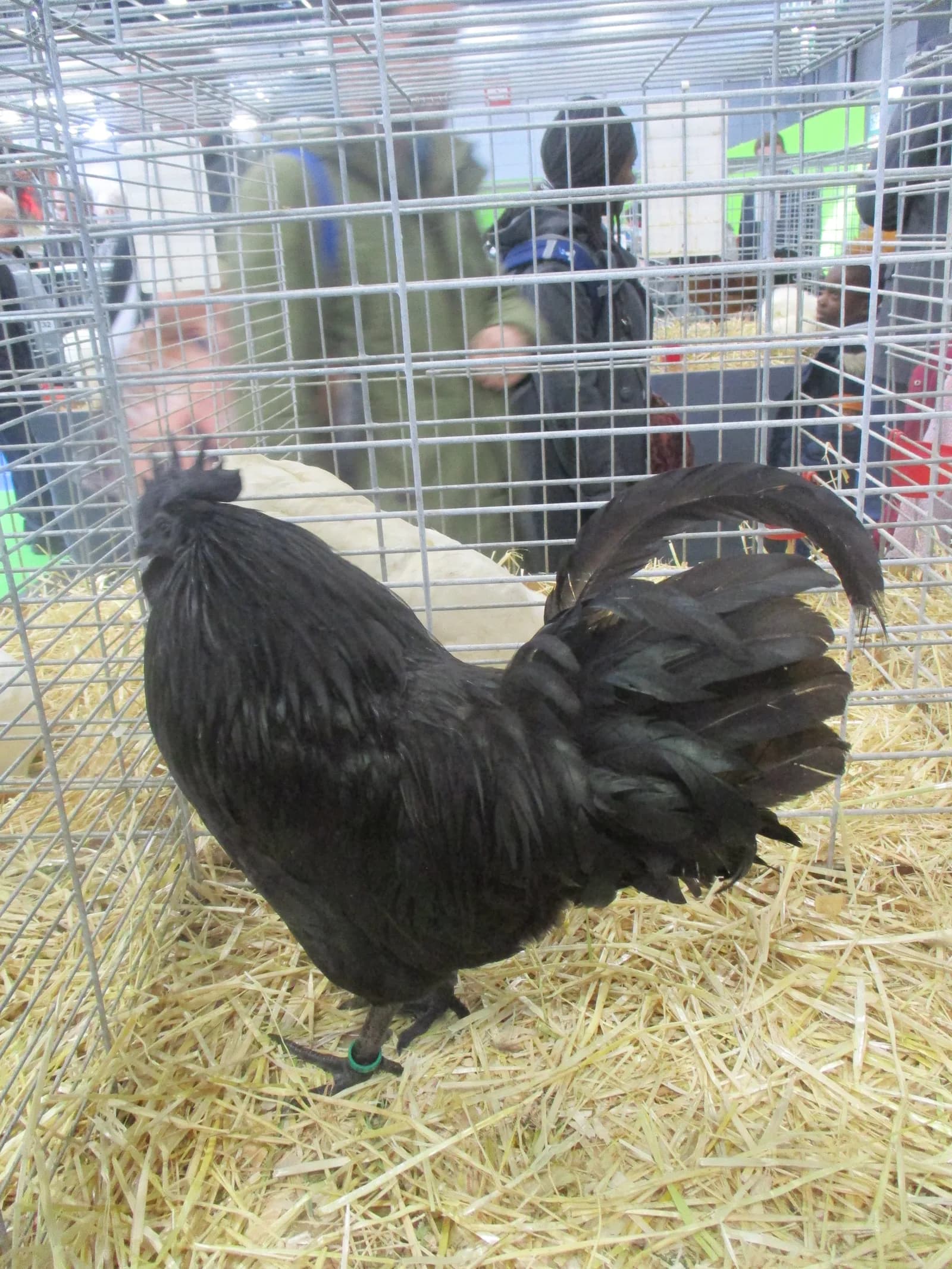
The Ayam Cemani is the chicken that is black all the way through: feathers, comb, wattles, beak, eyes, skin, legs, tongue, and, under the skin, the muscle, bones, and organs. It comes from one village on the island of Java, it carries a gene it shares with the Silkie, and for a decade it has been the most expensive chicken in the American backyard. It is also the most mythologized, so this guide separates what the breed is from what the internet says it is, using an Indonesian university review of the breed, the genomics paper that traced its color, and the two US sources that sell it.
Quick Answer
Ayam Cemani is a rare Indonesian landrace from Kedu, in Temanggung, Central Java. A dominant mutation called fibromelanosis, the same one that blackens a Silkie's skin, floods every tissue with melanin, so the bird is black inside and out; the eggs, blood, and the bones' marrow are not. Hens weigh about 4.5 pounds and roosters about 7, lay roughly 100 to 120 cream-colored eggs a year, rarely go broody, tolerate heat well, and live six to eight years. Hens are calm; roosters are protective. In the United States, day-old chicks run about $70 to $100 each from the importer that established the breed here, and hatching eggs $25 to $45.
What You'll Learn
- •Ayam Cemani at a glance
- •Where the Ayam Cemani comes from
- •Why it is black: fibromelanosis
- •What is black and what is not
- •Eggs: color, size, and how many
- •Size, temperament, and behavior
- •Care: heat, cold, feed, and health
- •Ayam Cemani meat
- •The culture around the bird
- •Ayam Cemani vs Silkie, Kadaknath, and the zombie chicken
- •Buying an Ayam Cemani: price and what to check
- •Frequently asked questions
Ayam Cemani at a Glance
| Origin | Kedu village, Temanggung, Central Java, Indonesia |
| Name | Ayam means chicken and cemani means entirely black in Indonesian |
| Weight | Hen about 4.5 lb, rooster about 7 lb, pullet about 4 lb |
| Eggs per year | About 100 to 120 |
| Egg color and size | Cream, about 45 grams, a little smaller than a standard large egg |
| Broodiness | Low; hens are poor setters |
| Temperament | Hens calm and gentle; roosters protective of the flock |
| Heat | Excellent |
| Cold | Tolerates it with a warm, dry retreat |
| Lifespan | 6 to 8 years |
| Genetics | Fibromelanosis, dominant, from a duplication involving the EDN3 gene on chromosome 20 |
| Sexing | Difficult until adult feathers come in |
| US price | Chicks about $70 to $100; hatching eggs $25 to $45 |
Where the Ayam Cemani Comes From
The breed is a local landrace of Kedu village in the Temanggung regency of Central Java, one of a family of Kedu chickens that includes a black-plumaged Kedu with normal skin and a white Kedu. A 2024 review of the breed by nutrition scientists at Diponegoro University in Semarang describes it as a very rare Indonesian local breed and traces the name to the Indonesian words for chicken and "entirely black." Like every domestic chicken, it descends from the red junglefowl of Southeast Asia, and the review notes it shares a common ancestry with the other Kedu and the ordinary Kampung village chickens of the region.
Indonesian keepers raise Ayam Cemani for eggs and meat in the domestic market and, on Java, for ceremony and folk medicine. The birds reached Europe in the late twentieth century and the United States through Greenfire Farms of Florida, which established the breed here and brought in a new bloodline in 2023. Greenfire dates the breed's history on Java to around 1500.
Why It Is Black: Fibromelanosis
The color is a single mutation, and it is well studied because the Silkie has it too.
Fibromelanosis, also called dermal hyperpigmentation, is a condition in which melanin, the pigment that colors skin and feathers, accumulates in tissues where a normal chicken has none: the connective tissue, the lining of the organs, the covering of the bones. In a 2017 study in PLOS ONE, a team led by Anik Budhi Dharmayanthi compared the genomes of Indonesian Cemani and Chinese Silkie chickens and confirmed that both carry complex duplications on chromosome 20 involving the gene for endothelin 3, or EDN3. EDN3 helps control the movement and multiplication of the neural crest cells that become pigment cells; extra copies of it send pigment cells everywhere. The same trait turns up in the Kadaknath of India, the Black H'Mong of Vietnam, the Svarthöna of Sweden, and the Tuzo of Argentina, and the researchers' comparison suggests the mutation arose once and spread with the birds.
The gene is dominant. One copy is enough to blacken a bird, which is why a Cemani rooster over an ordinary white hen produces the dark-skinned zombie chicken, and why the trait is easy to move into other breeds and hard to breed out. The Diponegoro review notes the Cemani shows the most complete expression of the trait of any breed, and its black tongue is one of the things that separates it from its Kedu cousins.
What Is Black and What Is Not
Black: the plumage, with a green sheen in sun; the comb, wattles, and face; the beak; the eyes; the skin; the legs and feet; the tongue; the muscle; the internal organs; the surface of the bones.
Not black, whatever you have read: the blood, which is red, because pigment sits in tissue rather than in blood; and the eggs, which are cream. The Diponegoro review is specific that the eggs are cream-colored, and every US breeder says the same. A seller offering black Ayam Cemani eggs is selling something else.
Two more things to know about the color. Chicks hatch black, so there is no waiting to see. And the review notes that sexing young birds is difficult until the adult feathers develop, which is part of why sexed chicks are rare and expensive.
Eggs: Color, Size, and How Many
Ayam Cemani hens lay cream-colored eggs averaging about 45 grams, per the Diponegoro review, which is a medium egg by American grading. Greenfire Farms puts production at 100 to 120 eggs a year. That is a light-laying breed, comparable to a Silkie and well short of a Leghorn's 300, and the reason nobody keeps Cemani for breakfast.
The review adds a detail keepers should plan around: the hens are poor setters and seldom hatch their own brood. If you want chicks, that means an incubator or a broody hen of another breed. Our incubator guide covers the options, and a Silkie hen will sit on anything.
Hens start laying at about the usual age for a light breed and, in the experience keepers report, lay in runs with rests between them rather than steadily. Treat the 100-to-120 figure as a good year.
Size, Temperament, and Behavior
Cackle Hatchery, one of the few US hatcheries that sells the breed, lists the weights: hens about 4.5 pounds, roosters about 7, pullets about 4. It is a lean, upright, medium-light bird with a single comb, the build of the Mediterranean layers rather than the heavy dual-purpose breeds.
The Diponegoro review describes the hens as calm and gentle and the roosters as protective of their flocks, with the usual fights for dominance among males. In practice, American keepers find Cemani alert and somewhat reserved: not a lap bird like an Orpington, not flighty like a Leghorn, and inclined to keep to themselves in a mixed flock. Roosters watch the sky and will confront a threat. They are good foragers and, as a light breed, competent flyers; a 4-foot fence will not hold one that wants out.
Care: Heat, Cold, Feed, and Health
Heat. The breed's strength. It comes from a hot climate, and the review notes it performs best in hot locations. Shade and water are enough in a Georgia August.
Cold. Workable, with care. The review says the breed can be kept in relatively cold temperatures if it has a warm retreat, and the single comb and lean body are the weak points in a hard freeze. A dry, draft-free coop, deep litter, and the frostbite precautions in our winter care guide cover it; in the northern tier a radiant panel on a thermostat is reasonable insurance for a bird this expensive.
Feed. Standard layer feed; a light breed eats about a quarter pound a day. In Indonesia, the review notes, keepers give newly hatched chicks water with palm sugar for the first days; here, chick starter and clean water do the same job.
Health. Nothing breed-specific is documented. The usual rules apply: buy Marek's-vaccinated chicks, keep a dust bath available, and check for mites, which hide well on a black bird. Life expectancy per the review is six to eight years.
Predators. A black chicken on green grass is easy for a hawk to pick out, and a $90 bird is an expensive loss. A covered run is worth it; see the predator protection guide.
Ayam Cemani Meat
In Indonesia the bird is eaten, and the meat is prized. The Diponegoro review reports it as leaner than broiler meat, with a fat content around 3 percent against a broiler's 16, and a firmer texture and stronger flavor that Indonesian consumers pay a premium for. The meat is dark gray to black through the muscle, which is the fibromelanosis, not a defect. In the United States almost nobody eats one; at current prices a Cemani is a breeding bird or an ornament, and the meat question is mostly curiosity.
The Culture Around the Bird
On Java the Cemani is more than livestock. The review describes its use in ritual ceremonies and in folk medicine for heart and respiratory complaints, and a specific belief around the first egg a hen lays, called the tembean: that eating it helps a couple conceive. First eggs are rare and sought after there for that reason. None of this is why the bird is black, and none of it survives the trip to an American backyard, but it explains the prices the breed commanded in Indonesia long before it commanded them here.
Ayam Cemani vs Silkie, Kadaknath, and the Zombie Chicken
| Ayam Cemani | Silkie | Kadaknath | Zombie chicken | |
|---|---|---|---|---|
| What it is | Indonesian landrace | Chinese bantam | Indian landrace | Cemani x White Leghorn hybrid |
| Black skin and tissue | Yes, most complete | Yes | Yes | Yes, dark face and legs |
| Plumage | Black, normal feathers | Any color, fur-like feathers | Black to mottled | Pale, from the Leghorn |
| Eggs per year | 100 to 120, cream | 100 to 120, cream | 80 to 120, light brown | 200 or more, white to cream |
| Weight (hen) | About 4.5 lb | About 2 lb | About 3 lb | About 4 to 5 lb |
| Why keep it | The look, breeding | Pets, broodies | Meat, rarity | Eggs with the look |
The Silkie is the same gene in a completely different bird; the review makes the point that the two look nothing alike apart from the skin. The Kadaknath is the Indian cousin, black-fleshed and kept for meat. The zombie chicken is the cross that gives you Cemani skin on a bird that actually lays.
Buying an Ayam Cemani: Price and What to Check
The breed's US supply runs through a few sources. Greenfire Farms, the importer, lists unsexed day-old chicks at about $70 to $100 depending on the bloodline and hatching eggs at about $25 each, and often shows nothing available; the 2023 import bloodline sells out. Cackle Hatchery sells hatching eggs from about $45. Private breeders sell started birds and pairs at prices that vary with color quality and lineage, from around $100 for a chick from an established line to several hundred for a breeding pair.
What to check before you pay:
- •Tongue and mouth. The best-expressed birds are black inside the mouth. Pink there means incomplete expression or a cross.
- •Skin under the feathers. Part the feathers on the breast; the skin should be black, not gray.
- •Egg color. Ask to see eggs. Cream is right. Anyone promising black eggs is not selling Cemani.
- •Vaccination. Marek's at hatch.
- •Roosters. Straight run means half roosters, and Cemani roosters are harder to rehome than most because of the price expectations around them.
Our where to buy chickens guide covers the rest of the checklist.
Frequently Asked Questions
Are Ayam Cemani eggs black?
No. They are cream-colored and about 45 grams, per the Diponegoro University review of the breed. Black eggs are a myth that sells hatching eggs of other breeds.
Is Ayam Cemani blood black?
No. The pigment sits in the tissues, not the blood. The muscle, organs, and bone surfaces are dark; the blood is red.
How much does an Ayam Cemani cost?
In the United States, about $70 to $100 for an unsexed day-old chick from the importer, $25 to $45 for a hatching egg, and $100 and up for started birds from private breeders. A breeding pair from a good line costs several hundred dollars.
How many eggs does an Ayam Cemani lay?
About 100 to 120 a year in a good year, in runs with rests between. The hens rarely go broody and are poor setters.
Why is the Ayam Cemani black?
Fibromelanosis: a dominant mutation involving a duplication of the EDN3 gene region on chromosome 20 that sends pigment cells into every tissue. The Silkie, Kadaknath, and several other breeds carry the same mutation, and the 2017 genomics study suggests it arose once.
Is the Ayam Cemani a good pet?
It is calm, alert, and easy to keep in warm climates, but it is not a lap chicken and it lays lightly. People keep it for the way it looks. For a friendly pet that lays a little, a Silkie is cheaper and cuddlier; for eggs with the black-skin look, the zombie chicken cross lays twice as much.
Can I eat an Ayam Cemani?
You can, and Indonesians do. The meat is dark, lean, and firm. At US prices it is an expensive dinner, and almost everyone here keeps the bird for breeding or show.
Is the Ayam Cemani recognized by the APA?
No. It is a landrace with an American breeders' association but no American Poultry Association standard.
An Ayam Cemani is a light, heat-loving Indonesian layer that happens to be black to the bone. Buy it for the look, breed it if you want to earn back the price, keep it shaded, covered, and vaccinated, and ignore anyone who tells you the eggs are black.
Sources:
- •Diponegoro University (Semarang, Indonesia). A comparative review on Ayam Cemani chicken: a comparison with the most common chicken species in terms of nutritional values, LCA, price and consumer acceptance. PMC, 2024. https://pmc.ncbi.nlm.nih.gov/articles/PMC11088562/
- •Dharmayanthi, A. B., et al. (2017). The origin and evolution of fibromelanosis in domesticated chickens: Genomic comparison of Indonesian Cemani and Chinese Silkie breeds. PLOS ONE 12(4): e0173147. https://journals.plos.org/plosone/article?id=10.1371/journal.pone.0173147
- •Greenfire Farms. Ayam Cemani (US importer; history, egg production, prices). https://greenfirefarms.com/products/ayam-cemani
- •Cackle Hatchery. Ayam Cemani Chicken (weights, hatching egg prices). https://www.cacklehatchery.com/product/ayam-cemani-chicken/
- •University of Kentucky Cooperative Extension. Small Flock Poultry resources. https://poultry.extension.org/
Related Guides
Black Copper Marans: Complete Breed Guide
Black Copper Marans lay the darkest chocolate-brown eggs of any chicken. Guide to egg color, appearance, temperament, hatchery vs breeder, and care.
BreedsCuckoo Marans: Complete Breed Guide
Cuckoo Marans lay dark brown eggs and are the easiest Marans to find and sex. Guide to egg color, barred looks, temperament, care, and Cuckoo vs Black Copper.
BreedsAraucana Chicken Breed Guide: Blue Eggs, Tufts, Care
Araucana chicken breed guide: rumpless bodies, ear tufts, true blue eggs, the lethal tuft gene, care, and how they differ from Ameraucanas.
BreedsBlack Sex Link Chicken: Eggs, Size, Temperament & Genetics
The Black Sex Link is a Barred Rock x Rhode Island Red cross you can sex at hatch. Eggs per year, adult weight, temperament, and how the color trick works.