What Is a Pullet? Age, Laying Signs, and Buying Tips
A pullet is a female chicken under a year old. When she becomes a hen, how to tell a pullet from a cockerel, and what started pullets cost versus chicks.
Researched from university extension, USDA, and veterinary sources. How we research.
A pullet is a female chicken less than a year old. That is the whole definition, and it is the one hatcheries, poultry shows, and extension services all use. The male equivalent is a cockerel. Once she passes her first birthday she is a hen, and he is a cock or rooster.
In everyday backyard use the word gets stretched a little. Feed stores and hatcheries sell "pullet chicks," meaning day-old chicks that have been sexed female, and "started pullets," meaning young females raised past the brooder stage and sold at 15 to 22 weeks. When someone says they are "waiting on their pullets to lay," they mean the young birds that have not started yet. This guide covers all of it: the age cutoffs, the signs a pullet is about to lay, how to tell a pullet from a cockerel, and whether buying started pullets beats raising chicks.
The Terms, Side by Side
| Term | Meaning |
|---|---|
| Chick | Newly hatched bird of either sex, roughly the first 6 to 8 weeks |
| Pullet | Female under 1 year old |
| Cockerel | Male under 1 year old |
| Hen | Female 1 year and older |
| Cock or rooster | Male 1 year and older |
| Point-of-lay pullet | Pullet close to her first egg, usually 16 to 22 weeks |
| Started pullet | Pullet raised past brooding and sold as a young bird, typically 15 to 22 weeks |
| Straight run | Chicks sold unsexed, about half of them cockerels |
The one-year line is a show convention that everyone else borrowed. At an American Poultry Association show, a female under 12 months is entered as a pullet and judged against other pullets. In a backyard, nobody is checking her birth certificate: a bird that has been laying for six months is a hen in every practical sense even if she hatched last spring.
When Does a Pullet Become a Hen?
Technically at 12 months. Practically, most keepers start calling her a hen once she is laying steadily. Both are fine. If you are filling out a show entry or a sale listing, use the age. If you are talking to a neighbor, use whichever one comes out.
When Do Pullets Start Laying?
Most pullets lay their first egg between 18 and 22 weeks. Production hybrids like ISA Browns and Golden Comets can start as early as 16 weeks. Heavy and heritage breeds such as Brahmas, Orpingtons, and Wyandottes often wait until 24 to 28 weeks. The University of Wisconsin's extension defines ready-to-lay pullets as production-type females that are 18 to 20 weeks old and have laid their first eggs.
Timing also depends on the season. A pullet who reaches 20 weeks in May, with 15 hours of daylight, starts on schedule. A pullet who reaches 20 weeks in November may hold off until the days lengthen in late winter unless you add light. Our guide on when chickens start laying eggs goes deeper on breed and season.
Signs a Pullet Is About to Lay
You do not have to guess. Wisconsin's poultry judges use the same physical cues to evaluate ready-to-lay pullets, and they work in a backyard.
- •Comb and wattles turn red and grow. A pullet's comb is small and pale pink for months. In the two or three weeks before her first egg it swells and turns bright red. This is the most reliable early sign.
- •The squat. Walk up behind her and reach down. A pullet close to laying crouches, spreads her wings slightly, and holds still. It is a mating posture, and it appears a week or two before the first egg.
- •Pelvic bones spread. Feel just below the vent for two bony points. On an immature pullet they are close together and stiff. On a layer they are thin, flexible, and two or three fingers apart.
- •The vent changes. Wisconsin's judging guide describes a layer's vent as moist, large, and oblong, versus small, dry, and round on a non-layer.
- •Nest box interest. She starts climbing in and out of the boxes, scratching at the bedding, and sometimes sitting for a few minutes with nothing to show for it.
- •Louder and more vocal. Many pullets get talkative in the last week, and some practice the egg song before there is an egg.
The first few eggs are often small, occasionally soft-shelled or odd-shaped, and irregularly spaced. That settles within a few weeks. See egg problems and what they mean if it does not.
How to Tell a Pullet from a Cockerel
Hatcheries sex chicks two ways, and neither is easy at home. Vent sexing, developed in Japan and brought to North American hatcheries in the 1930s, takes years to learn, and hatcheries typically guarantee only about 90 percent accuracy on vent-sexed chicks (Murray McMurray's published guarantee is 90 percent). Feather sexing works on specific strains where a gene on the sex chromosome shows up in the chick's down or wing feathers. Sex-linked hybrids like the Black Sex Link and Golden Comet are the easy case: males and females hatch in different colors and can be sorted by anyone.
For everyone else, the signs show up over the first 6 to 12 weeks:
- •Comb and wattle development. Cockerels' combs redden and grow by 4 to 6 weeks. Pullets' stay small and pale until they approach laying.
- •Hackle and saddle feathers. By 10 to 14 weeks a cockerel grows pointed, shiny feathers on his neck and in front of his tail. A pullet's stay rounded.
- •Legs. Cockerels have thicker legs and, on many breeds, visible spur bumps early.
- •Behavior. Cockerels stand taller, chest-bump, and pick fights sooner. Crowing attempts can start as early as 8 weeks, though some wait past 16.
- •Tail. Sickle feathers, the long curved tail plumes, are a cockerel giveaway once they come in, but they are late, often 12 weeks or more.
If a "pullet" starts crowing at 10 weeks, you have a cockerel. Hatcheries guarantee sexing at about 90 percent, so one wrong bird in ten is within the fine print, not a mistake. For a fuller walk through every clue, see our guide to telling a rooster from a hen, and if you end up with a male you did not plan on, whether you need a rooster covers the options.
Pullet Chicks vs Started Pullets: Which to Buy
Pullet chicks are day-old females. They cost the least, need a brooder with heat for about six weeks, and take 4 to 6 months to lay. You get to pick from every breed a hatchery carries, and the birds imprint on you. Our brooder setup guide covers what you need before they arrive.
Started pullets are young females sold at 15 to 22 weeks. Cackle Hatchery sells them at 15 to 22 weeks, Meyer Hatchery at roughly 16 to 20. They cost several times what a chick does, but you skip the brooder, skip the heat lamp, skip the six-week wait to move them outside, and get eggs within a few weeks of bringing them home. The breed selection is narrower, usually the popular layers.
| Pullet chick | Started pullet | |
|---|---|---|
| Age at purchase | 1 to 3 days | 15 to 22 weeks |
| Brooder needed | Yes, about 6 weeks | No |
| Time to first egg | 4 to 6 months | A few weeks |
| Sexing accuracy | About 90 percent | Near certain |
| Breed choice | Widest | Limited |
| Risk of loss | Higher in the first two weeks | Low |
Started pullets make sense if it is late in the season, if you lost a bird and need a laying replacement fast, or if you do not want a brooder in the spare room. Chicks make sense for everything else. Whatever you buy, quarantine new birds for two weeks before mixing them with an existing flock. Our guide to introducing new chickens explains why and how.
Feeding a Pullet
Feed changes with age, and the calcium timing matters. The University of Florida's extension lays it out:
- •0 to 6 weeks: Starter feed, 20 to 24 percent protein.
- •6 to 18 weeks: Grower feed, 16 to 20 percent protein. Many stores sell a combined starter/grower that covers both stages.
- •18 weeks on: Layer feed, 14 to 16 percent protein with 3.5 to 4 percent calcium.
Do not switch to layer feed early. Florida's guide is explicit that birds under 18 weeks need only about 1 percent calcium and that layer feed should not go to birds younger than that. If your pullets and older hens share a feeder, run everyone on grower and put oyster shell in a separate dish so the layers can take what they need. See what to feed chickens for the full breakdown.
Frequently Asked Questions
What is a pullet in chickens?
A female chicken under one year old. After her first birthday she is called a hen. The term comes from poultry showing, where birds are judged in age classes.
What is the difference between a pullet and a hen?
Age only. A pullet is under 12 months and a hen is 12 months or older. In casual use, a pullet becomes a "hen" once she is laying regularly, even if she is younger than a year.
What is a pullet vs a cockerel?
Both are chickens under a year old. A pullet is female and a cockerel is male. Sex-link hybrids can be sorted at hatch by color; most other breeds show their sex by 6 to 12 weeks through comb size, feather shape, and behavior.
How old is a pullet when it starts laying?
Usually 18 to 22 weeks. Hybrids can start at 16 weeks and heavy breeds may wait until 24 to 28 weeks. Day length matters: a pullet maturing in fall may not start until the days lengthen.
What does a started pullet cost?
Several times the price of a day-old chick, because the seller has fed and housed her for four or five months. Prices vary by breed and region, so check a few local farms and the big hatcheries' started-pullet listings.
Can a pullet lay eggs?
Yes. Most pullets lay their first egg around 18 to 22 weeks, well before they turn a year old and officially become hens. Their early eggs are small and get bigger over the first few months.
Bottom Line
A pullet is simply a young female chicken, under a year old and usually not yet laying. Watch for a reddening comb and the squat to know when her first egg is a week or two away, keep her on grower feed until 18 weeks, and decide between chicks and started pullets based on how soon you want eggs and whether you have a brooder ready.
Sources:
- •University of Wisconsin Extension, Livestock Division. Judging Ready-to-Lay Pullets (definition at 18 to 20 weeks, pelvic bone and vent cues). https://livestock.extension.wisc.edu/articles/judging-ready-to-lay-pullets/
- •University of Florida IFAS Extension. Raising Backyard Chickens for Eggs, AN239 (feed stages, calcium at 18 weeks). https://ask.ifas.ufl.edu/publication/AN239
- •Poultry Extension (eXtension). Sexing Day-Old Chicks (vent sexing history, feather sexing). https://poultry.extension.org/articles/poultry-management/sexing-day-old-chicks/
- •Meyer Hatchery. Chicktionary: Glossary of Common Poultry Terms (pullet definition) and Started Pullets (16 to 20 weeks). https://meyerhatchery.com/products/started-pullets
- •Murray McMurray Hatchery. Order guarantees (90 percent sexing accuracy). https://www.mcmurrayhatchery.com/
- •Cackle Hatchery. Started pullets, 15 to 22 weeks. https://www.cacklehatchery.com/product/barred-rock-started-pullet/
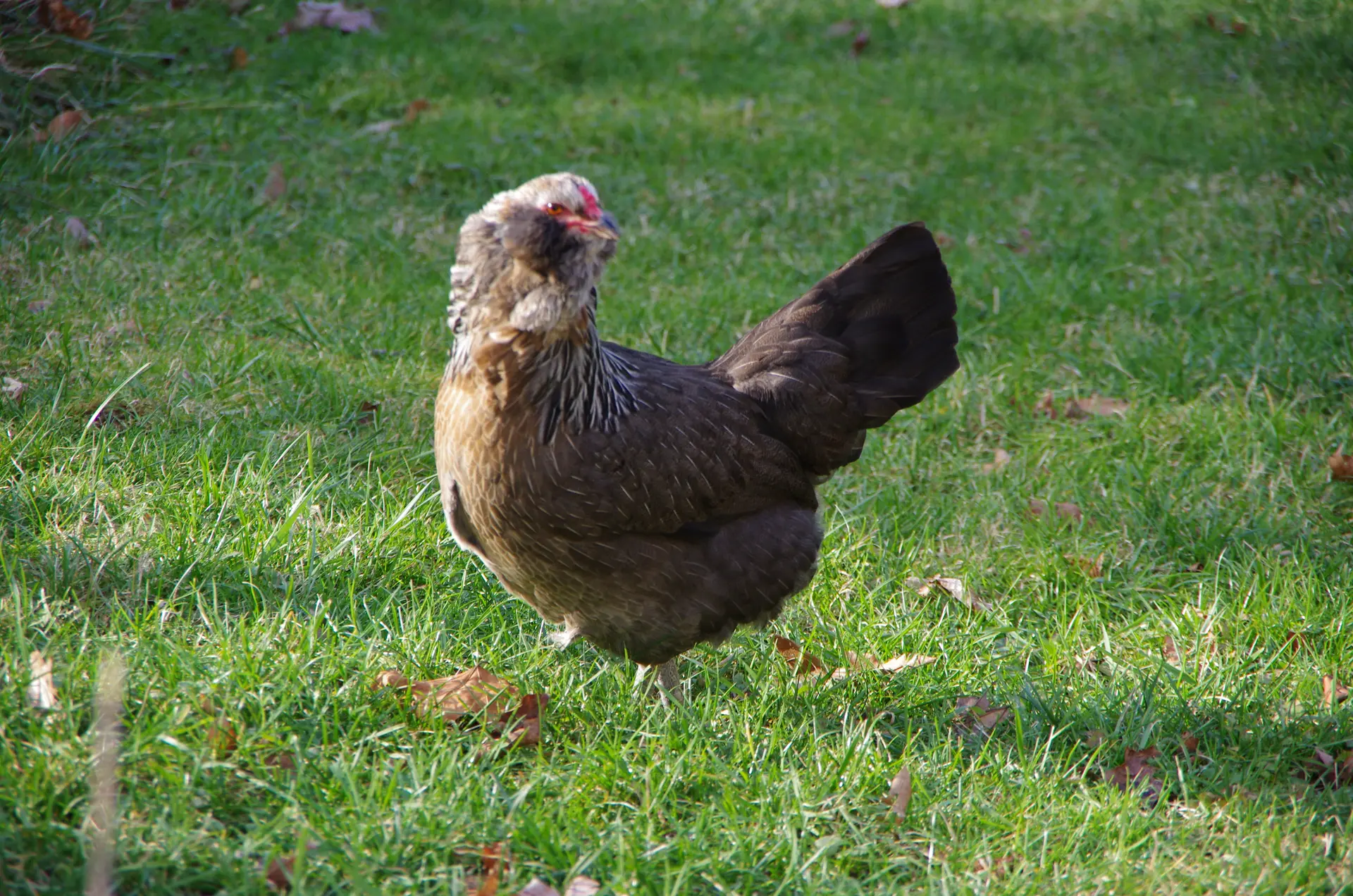
Image credit: Silver Ameraucana pullet by Scratchcradle, CC BY-SA 3.0, via Wikimedia Commons.
Related Guides
When Do Chickens Start Laying Eggs? Age & Signs
Most hens lay their first egg around 18 to 22 weeks old. Learn the signs a pullet is ready, what delays laying, and how to know eggs are coming.
Beginner GuidesBroody Hen: Signs and How to Break It (or Hatch)
A broody hen sits on the nest and stops laying. Learn the signs, how to safely break broodiness in a few days, and when to let her hatch chicks.
Beginner GuidesRooster vs Hen: How to Tell the Difference
How to tell a rooster from a hen: comb and wattle size, hackle and saddle feathers, crowing, spurs, and behavior, plus the age each clue appears.
Beginner GuidesDuck Eggs vs Chicken Eggs: Taste, Nutrition, Baking
How duck eggs compare to chicken eggs on size, taste, nutrition, and baking, plus whether raising ducks for eggs is right for your backyard.