Do Possums Eat Chickens? Protect Your Flock
Do possums eat chickens? Yes, mostly eggs and chicks, but they can kill roosting hens. Learn the attack signs and how to keep opossums out of your coop.
Researched from university extension, USDA, and veterinary sources. How we research.
Short answer: yes, possums eat chickens, but not the way most people fear. A Virginia opossum in your yard is far more likely to clean out a nest box, snatch a chick, or raid the feeder than to slaughter your whole flock in one night. That said, a hungry possum will kill and eat a roosting hen if it can reach one. This guide covers what possums actually do to a backyard flock, how to tell a possum attack from a raccoon or weasel, and the handful of fixes that keep them out for good.
What You'll Learn
- •Do Possums Eat Chickens? The Honest Answer
- •Meet the Virginia Opossum
- •What Possums Actually Target: Eggs, Chicks, and Feed
- •Will a Possum Kill an Adult Chicken?
- •Signs a Possum Attacked Your Flock
- •How Possums Get Into Your Coop
- •How to Keep Possums Away From Chickens
- •Nighttime Lockup: Your Single Best Defense
- •Trapping and Removing a Possum
- •Should You Actually Want Possums Around?
- •Frequently Asked Questions
Do Possums Eat Chickens? The Honest Answer
Possums are omnivores and opportunists. They eat almost anything they can find: fruit, insects, carrion, pet food, garbage, rodents, and yes, chicken eggs, chicks, and the occasional adult bird. So when someone asks "do possums eat chickens," the accurate answer is a qualified yes.
Here is the part the scare-you articles leave out. An opossum is a slow, clumsy scavenger, not a fast, efficient killer like a weasel or a raccoon. Given the choice, a possum goes for the easy calories first: eggs sitting in a nest box, spilled feed, a dead bird, or a day-old chick that strays. It will kill a roosting adult hen if the bird is within reach and the possum is hungry enough, but a possum almost never wipes out an entire flock in a single visit the way a raccoon or a weasel can.
Why does this distinction matter? Because it changes how you respond. If you find one dead bird eaten at the breast and your eggs gone, you are probably dealing with a possum, and the fix is securing the coop at night. If you find five dead birds with their heads torn off, that is a different predator, and you have a bigger hole to patch. Knowing your enemy saves you from chasing the wrong fix while the real one comes back.
For the full rundown of every animal that targets backyard flocks, see our guide to chicken predators and how to protect your flock. This article zooms in on the possum specifically.
Meet the Virginia Opossum
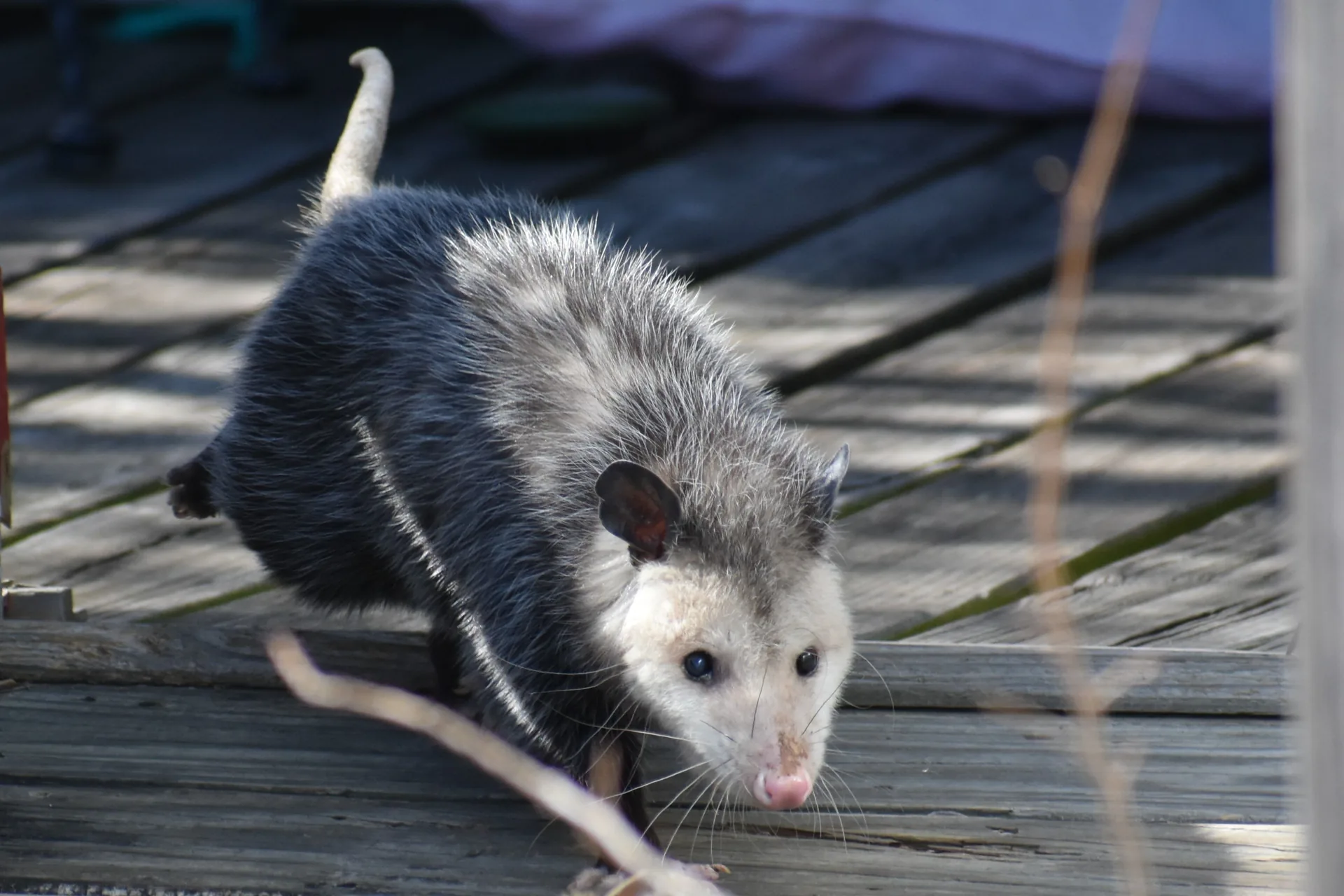
The animal raiding your coop in North America is the Virginia opossum (Didelphis virginiana), the only marsupial on the continent. People say "possum" and "opossum" interchangeably here, though true possums are a separate group of animals native to Australia. For a backyard keeper in the United States, possum and opossum mean the same gray, cat-sized, pointy-nosed night visitor.
A few facts that explain its behavior around your chickens:
- •It is nocturnal. Possums hunt and forage at night, which is exactly when your birds are roosting and most defenseless.
- •It climbs well. Possums have a prehensile tail and an opposable "thumb" on each hind foot. They climb fences, trees, and coop walls, and they reach elevated nest boxes that a fox never could.
- •It has 50 teeth. That is more than any other land mammal in North America. When a cornered possum hisses, drools, and shows all 50, it looks terrifying. It is almost always a bluff.
- •It is not aggressive. Possums would rather flee or "play possum" (go limp and feign death) than fight. They are scavengers at heart, which is why they prefer stealing eggs over hunting live birds.
- •It has a short life and a big range. Most wild possums live only two to four years and wander across a large territory, which matters when you think about trapping and relocation later.
What Possums Actually Target: Eggs, Chicks, and Feed
Most possum trouble in a coop is not a dramatic kill. It is quiet theft. Here is what they go after, in order of how often it happens.
Eggs. This is the number one possum crime. A possum will clean out a nest box overnight, eating eggs whole or leaving crushed, emptied shells behind. If you keep finding eggs missing or broken in the box with the membrane licked clean, a possum is a prime suspect. Collecting eggs daily and closing the coop at night removes the temptation.
Chicks and bantams. Young birds and small breeds are the right size for a possum to grab and eat. A brooder or a run that is not fully enclosed is an open invitation. If you are raising chicks, keep them in a predator-tight brooder until they are large enough to roost with the flock, and even then make sure the coop itself is sealed.
Feed. A feeder left out overnight is a buffet. Possums are drawn in by the smell of grain and pet food, and once they learn your coop has an easy meal, they come back. Store feed in sealed metal containers and bring feeders in or close them at night. The same habits that stop possums also stop rats, so see our guide on how to stop rodents eating chicken feed for the full routine.
Carrion. Possums are nature's cleanup crew. If a bird dies of other causes and the body is left in the run, a possum will happily scavenge it. Finding a possum eating a dead chicken does not always mean the possum did the killing. It may just be finishing someone else's work.
Will a Possum Kill an Adult Chicken?
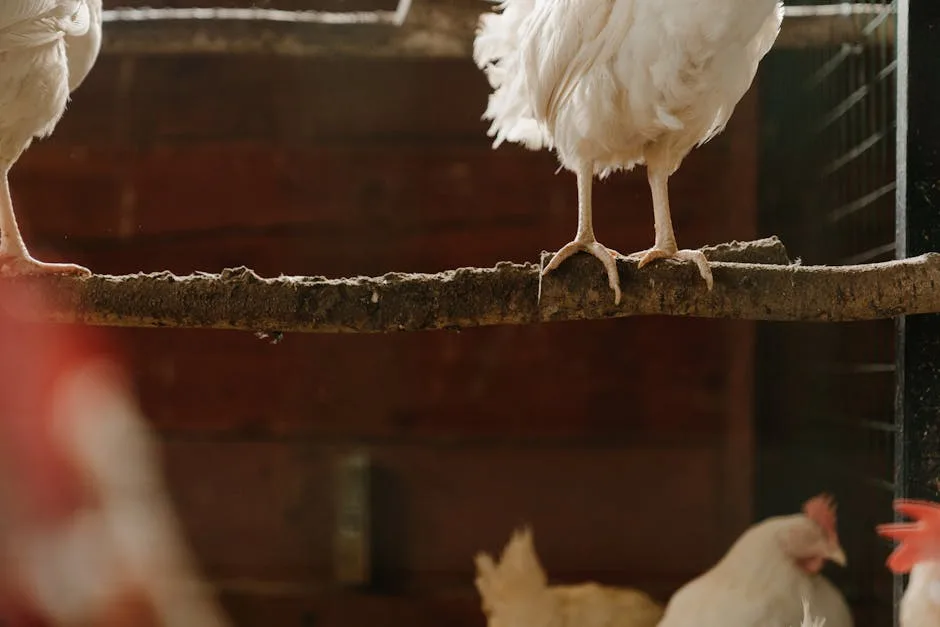
Yes, a possum can and sometimes does kill a full-grown hen, but the circumstances matter. The classic scenario is a possum that gets into a closed coop at night and finds birds roosting low or on the floor. A sleeping chicken is slow to react, and a possum will bite and start feeding on a bird it can reach.
What makes possum kills recognizable is the pattern. A possum usually kills one bird, not a pile of them. It tends to feed on the spot rather than carry the carcass off, and it starts on the soft parts: the abdomen, the breast, the crop, and sometimes the area around the vent. You often find the bird dead inside or near the coop, partly eaten, with the rest of the flock shaken but alive.
Compare that to the predators people confuse possums with. A raccoon often kills several birds and may pull heads or crops through the wire. A weasel or mink can kill a whole row of birds in a frenzy and leave them stacked, frequently with bites to the back of the head and neck. A fox or coyote usually carries the entire bird away, so you find feathers and an empty roost. If the damage is a single bird eaten where it died, a possum moves to the top of the list.
The takeaway: a possum is a real threat to adult birds only when it can get inside a coop that should have been closed. A flock locked in a tight, hardware-cloth coop at dusk is almost never killed by a possum. That is good news, because it means the fix is entirely in your hands.
Signs a Possum Attacked Your Flock
Predators leave evidence. Reading it correctly tells you what to fix. Here is how a possum attack usually reads against the lookalikes.
| Clue | Likely culprit |
|---|---|
| One bird killed, eaten on the spot at the breast or abdomen | Possum |
| Eggs gone or crushed with empty shells left in the box | Possum (or snake, or rat) |
| Several birds dead, heads or crops missing, pulled into wire | Raccoon |
| A row of birds killed, piled up, bites to the back of the neck | Weasel or mink |
| Bird missing entirely, only feathers left behind | Fox or coyote |
| Chick or small bird simply gone from an open run | Possum, hawk, or cat |
A few other possum tells: five-toed tracks with a thumb-like print that looks almost like a tiny handprint, droppings near the feed, and disturbed nest bedding. Possums are not tidy raiders, so you may also find the coop pawed through and the feeder knocked around.
One honest caveat worth repeating: these signs overlap, and even experienced keepers guess wrong. Many "the possum killed my chicken" stories turn out to be a raccoon or a dog. If you cannot tell, a coop camera settles the argument fast. Catching the actual visitor on video is worth more than any field-sign chart, and it stops you from fixing the wrong problem.
How Possums Get Into Your Coop
Possums are climbers, not champion diggers, so most of them get in from above or through a gap rather than by tunneling. The usual entry points:
- •Open pop doors at night. The single most common way in. If the coop door is still open at dusk, a possum will stroll right through it.
- •Gaps in walls, vents, and the roofline. A possum can squeeze through a surprisingly small opening and will climb to reach a high vent covered only with flimsy screen.
- •Chicken wire. Standard chicken wire keeps chickens in. It does not keep possums out. Those sharp little teeth and clawed feet make short work of thin wire and plastic netting.
- •Elevated nest boxes. Because possums climb, an external nest box with a loose lid is an easy target for an egg thief.
- •Under the walls. Possums will dig if the footing is loose, slipping under a coop or run wall that sits right on the soil with no barrier.
The pattern is clear: if a raccoon cannot get in, a possum usually cannot either. Possum-proofing and raccoon-proofing are the same job.
How to Keep Possums Away From Chickens
Exclusion beats every other method. You are not trying to win a fight with a possum; you are trying to make your coop a locked box it cannot open. Here is the checklist.
Swap chicken wire for hardware cloth. Half-inch galvanized hardware cloth is the standard for a reason. It stops possums, raccoons, weasels, snakes, and rats. Use it on every window, vent, and run panel. This one upgrade does more than anything else on the list. A 100-foot roll runs roughly $80 to $150 depending on height.
Seal every gap. Walk the coop with a flashlight at night and look for light coming through. Close any opening wider than half an inch where walls meet the floor, around doors, and along the roofline. Possums exploit the gap you overlooked.
Secure the latches. Possums are not the lock-pickers that raccoons are, but a loose door is a loose door. Two-step latches, barrel bolts, or a carabiner through the hasp keep both animals out.
Add a dig barrier. Bury hardware cloth about 12 inches deep around the run, or lay a two-foot hardware cloth apron flat on the ground extending outward from the base. This stops the digging-under route. For a full build-and-retrofit walkthrough, see our predator-proof chicken coop checklist.
Cover the run. Because possums climb, an open-topped run is only half protected. A covered run with hardware cloth or welded wire on top keeps climbers out and doubles as hawk protection. Our guide to chicken run fencing and netting covers the material choices.
Remove the attractants. Bring in or close feeders at dusk, store feed in sealed metal cans, clean up spilled grain, pick fallen fruit, and never leave pet food or garbage near the coop. A possum that finds nothing to eat has little reason to return.
Consider electric fencing for a persistent visitor. A single hot wire a few inches off the ground, or a hot wire along the top of the run, discourages a possum that keeps testing your defenses. See our guide to the best electric fence for chickens if you want a perimeter deterrent.
Nighttime Lockup: Your Single Best Defense
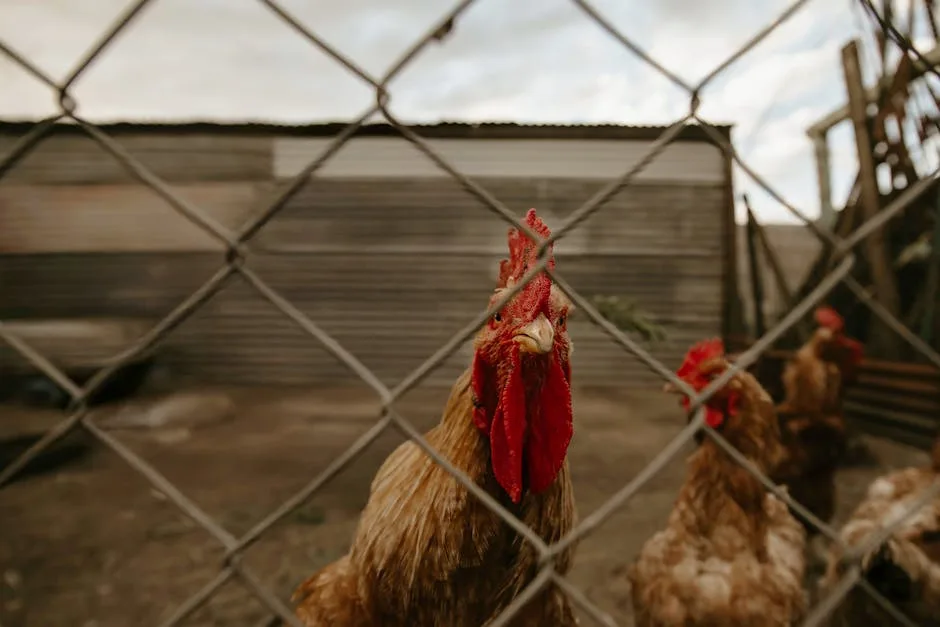
If you do only one thing, do this: lock your chickens inside a sealed coop every night before dark. Possums, raccoons, foxes, and owls all hunt at dusk and after. A flock closed into a tight coop by sundown is out of reach of nearly all of them.
The problem is human. We forget, we get home late, dusk creeps earlier in winter, and the one night the door stays open is the night something gets in. That is exactly why an automatic chicken coop door is one of the best upgrades a backyard keeper can make. Set it on a light sensor or a timer and the coop closes itself at dusk and opens at dawn, every single day, whether you remember or not. For possum and raccoon country, it pays for itself the first time it saves a bird.
Pair the auto door with a genuinely sealed coop and you have removed the possum's only real path to an adult bird. If you are shopping for a new setup, our roundup of the best chicken coops on Amazon flags which models need a hardware cloth upgrade out of the box, because many ship with chicken wire that will not stop a determined possum.
Trapping and Removing a Possum
Exclusion should be your first move, not trapping. Remove one possum and another wanders into the empty territory within weeks, because possums have large, overlapping ranges. A sealed coop protects you from all of them. A trap protects you from one, briefly.
That said, if a specific possum has learned your coop and keeps coming back, trapping can break the pattern while you finish sealing gaps. A few ground rules:
- •Check your local laws first. In many states, relocating wildlife is illegal or tightly regulated, and in some places the law requires a trapped nuisance animal to be released on site or handled by a licensed professional. Call your state wildlife agency or extension office before you set a trap.
- •Use a live cage trap sized for a raccoon or a cat. Bait with canned fish, cat food, or overripe fruit. Set it along the wall the possum travels, not out in the open.
- •Check the trap at dawn. A trapped animal left in sun or cold suffers. Never leave a set trap unchecked overnight into the day.
- •Know that relocation rarely works. Dropped into unfamiliar territory, a relocated possum usually struggles to find food and shelter and often does not survive. This is one reason wildlife agencies discourage it. Exclusion is kinder and more effective.
- •Do not poison. Poison is indiscriminate, illegal in many areas for this use, and a poisoned animal can be eaten by your own birds, pets, or a hawk.
If you are trapping because you are not sure what is actually visiting, put up a camera first. It is cheaper than a wasted week of trapping the wrong animal.
Should You Actually Want Possums Around?
Here is where the possum earns a little grace. Away from the coop, it is a useful neighbor. Possums are efficient scavengers that eat slugs, snails, beetles, cockroaches, overripe fruit, carrion, and even rodents and the occasional snake. They rarely carry rabies, thanks to a body temperature too low for the virus to thrive, so they are a lower disease risk than many mammals their size.
You have probably seen the claim that a single possum eats 5,000 ticks a season and fights Lyme disease. Treat that one with caution. It traces to a small 2009 study of six captive animals, and a 2021 study that examined the stomach contents of 32 wild opossums in Illinois found not a single tick. The honest version: possums may pick off a few ticks that latch onto them while grooming, but the dramatic "tick vacuum" figure is not supported. Keep them around for the slugs and cleanup, not as a pest-control miracle.
So the balanced view is this: you do not need to wage war on every possum in the county. You need to make your coop a box they cannot open. A sealed coop lets the possum do its useful scavenging in the yard while your birds sleep safe inside. That is a better outcome than an endless trapping campaign, and it is the setup every good beginner chicken guide points you toward from the start.
Frequently Asked Questions
Do possums eat chickens or just eggs?
Both, but eggs and chicks come first. A possum's easiest meal in a coop is unguarded eggs, spilled feed, and small or young birds. It will kill and eat an adult hen if it can reach a roosting bird at night, but that is less common than egg and chick theft. Most possum damage is quiet raiding, not a dramatic kill.
Will a possum kill a whole flock in one night?
Almost never. Possums typically kill one bird and feed on the spot. If you find several dead chickens, especially with heads or crops missing or bodies piled up, you are more likely dealing with a raccoon, a weasel, or a mink, not a possum.
How do I know it was a possum and not a raccoon?
Look at the pattern. One bird killed and eaten at the breast or abdomen, with eggs stolen, points to a possum. Multiple birds killed with heads torn off and pulled into the wire points to a raccoon. The signs overlap, so a coop camera is the surest way to confirm which animal is visiting.
What is the best way to keep possums out of the coop?
Seal the coop with half-inch hardware cloth, close every gap wider than half an inch, and lock the birds in every night before dark. An automatic coop door makes the nightly lockup foolproof. Remove feed at night and collect eggs daily so there is nothing worth raiding.
Can possums climb into an elevated coop or run?
Yes. Possums are strong climbers with a gripping tail and thumbed hind feet. They reach raised nest boxes and climb over open-topped runs. Cover the run and secure external nest box lids, because height alone will not stop a possum.
Are possums dangerous to me or my chickens to handle?
Possums are not aggressive and would rather flee or play dead than fight. They bluff by hissing and showing their 50 teeth, but bites are rare if you leave them alone. They seldom carry rabies. Still, never handle a wild possum with bare hands; use a trap and keep your distance.
Do mothballs or ammonia keep possums away?
Not reliably, and they are a bad idea near a coop. Mothballs are toxic and are not labeled for this use, and strong chemicals can harm your birds. Skip the home remedies and rely on exclusion: hardware cloth, sealed gaps, nighttime lockup, and removing food sources.
Should I kill a possum I catch near my chickens?
In most cases, no. Exclusion protects you from every possum, while killing one just opens territory for the next. Many areas also regulate how nuisance wildlife may be handled. Seal your coop, remove attractants, and if a specific animal persists, check your local wildlife laws before trapping.
Sources:
- •eXtension Poultry. Predator Management for Small and Backyard Poultry Flocks. https://poultry.extension.org/articles/predator-management/
- •Oklahoma State University Extension. Protecting Small Poultry Flocks from Predators. https://extension.okstate.edu/fact-sheets/protecting-small-poultry-flocks-from-predators.html
- •University of Maryland Extension. Identifying and Preventing Poultry Predators (FS-1132). https://extension.umd.edu/sites/extension.umd.edu/files/publications/Indentifying_and_Preventing_Poultry_Predators_FS-1132_ada.pdf
- •Merck Veterinary Manual. Poultry. https://www.merckvetmanual.com/poultry
Related Guides
Chicken Predators: How to Protect Your Flock
Learn which predators target backyard chickens and 10 proven ways to protect your flock. Covers raccoons, hawks, foxes, and more.
HealthChicken Lice: How to Spot and Get Rid of Them
Chicken lice live on the bird, not the coop. How to find them around the vent, clear an infestation with permethrin, and whether they bite people.
HealthChicken Vent Health: Pasty Butt, Prolapse, Egg Binding
Pasty butt, vent gleet, prolapse, and egg binding: how to spot each chicken vent problem, treat it safely at home, and know when to call a vet.
HealthChicken Molting: What's Normal and What's Not
Chickens molt and drop feathers every fall and stop laying for weeks. Learn the molt timeline, how to help, and the warning signs of a real problem.