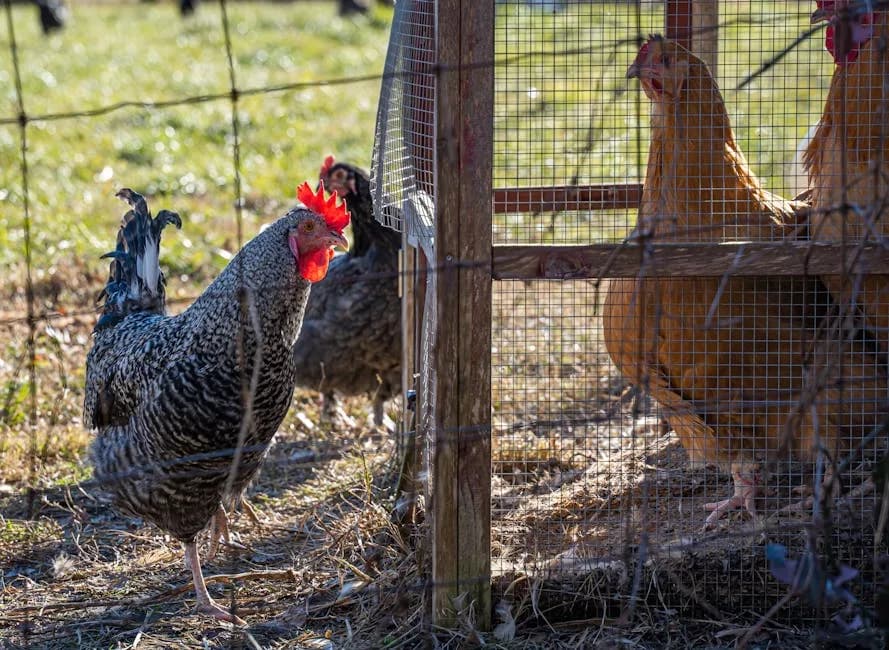
What Is a Chicken Tractor? Benefits, Plans & Uses
A chicken tractor is a floorless, movable coop that gives your flock fresh grass daily. Learn the benefits, sizing, DIY plans, and how to use one.
Researched from university extension, USDA, and veterinary sources. How we research.
Affiliate Disclosure: This article contains affiliate links to Amazon. If you buy something through these links, we earn a small commission at no extra cost to you. We only recommend products we genuinely think are worth your money. Full disclosure.
A chicken tractor is one of those ideas that sounds fancy and turns out to be dead simple: it is a coop with no floor that you drag to a fresh patch of grass every day. The birds mow, scratch, and fertilize as they go, and you get eggs or meat without the muck of a stationary run. Small farmers have used the idea for decades, and it scales down to a backyard just fine.
This guide covers what a chicken tractor actually is, why so many keepers swear by them, where they fall short, how to size one for your flock, and how to build and use one without making the common beginner mistakes.
Quick Answer
A chicken tractor is a floorless, portable coop that is moved to fresh ground on a regular schedule, usually daily. The open bottom lets chickens graze, forage bugs, and drop manure directly on the pasture, which fertilizes the ground while keeping the birds on clean grass and out of their own waste.
| Feature | Chicken Tractor |
|---|---|
| Floor | None; open to the ground |
| Mobility | Moved daily to every few days |
| Best flock size | 3 to 15 birds in a backyard model |
| Main jobs | Fresh forage, fertilizing, pest control, sanitation |
| Best for | Meat birds, layers on pasture, small yards |
| Weak point | Labor to move, and weather exposure |
What You'll Learn
- •What Is a Chicken Tractor?
- •How a Chicken Tractor Works
- •Benefits of a Chicken Tractor
- •Downsides and Limits
- •Chicken Tractor vs Stationary Coop vs Free Range
- •How Many Chickens Fit in a Tractor?
- •Key Features to Look For
- •Ready-Made Tractors Worth a Look
- •DIY Chicken Tractor Plans
- •How to Use a Chicken Tractor
- •Best Chickens for a Chicken Tractor
- •Frequently Asked Questions
What Is a Chicken Tractor?
A chicken tractor is a lightweight, bottomless coop that you move across the ground so your flock always has fresh pasture underneath them. The name comes from the job it does: like a farm tractor, it works the land, except the "engine" is a group of chickens scratching, grazing, and manuring as they go.
The design has been around under different names for a long time, from British "arks" to the pastured poultry pens the farmer Joel Salatin made famous at Polyface Farm. The gardener Andy Lee put the term "chicken tractor" into common use with his 1994 book of the same name. The concept is the same at any scale: keep the birds contained and protected, but keep moving them so they never sit on tired, fouled ground.
A tractor is different from a plain mobile chicken coop mostly in emphasis. Every chicken tractor is mobile, but the point of a tractor is the open floor and the daily move onto living grass. A wheeled coop with a solid floor is portable, but it is not doing the grazing-and-fertilizing job that defines a true tractor.
How a Chicken Tractor Works
The whole system rests on one habit: moving the tractor before the birds trash the ground under it. Here is the daily rhythm.
Chickens inside the tractor graze the greens, scratch up and eat insects, worms, and grubs, and drop their manure right onto the soil. Within a day or two, a group of birds will crop the grass down and cover the patch in droppings. Instead of letting that ground turn to bare, stinking dirt, which is exactly what happens in a fixed run, you slide or roll the tractor one length forward onto clean grass. The birds get a fresh salad bar, and the patch they just left gets a rest and a dose of nitrogen-rich fertilizer.
Do that day after day and the tractor walks a strip across your yard or pasture. By the time you circle back to the first patch weeks later, the grass has regrown, the manure has broken down, and any parasites left behind have died off in the sun without a host. That built-in rest period is the quiet genius of the design, and it is why tractored birds tend to stay healthier than birds locked on one spot.
Benefits of a Chicken Tractor
There are good reasons this old idea keeps coming back.
- •Fresh forage every day. Birds on rotating pasture eat grass, weeds, seeds, and a steady supply of bugs. That variety improves their diet, deepens yolk color, and trims your feed bill, though it will not replace feed entirely.
- •Free fertilizer, spread evenly. Instead of piling up in one run, manure is dropped in thin layers across the whole yard. Move the tractor at the right pace and you fertilize a lawn or garden bed without ever handling a shovel.
- •Natural pest and weed control. Chickens are relentless hunters of ticks, grasshoppers, grubs, and slugs, and they knock back weeds and weed seeds as they scratch. Running a tractor over a future garden bed clears and feeds it at the same time.
- •Cleaner, healthier birds. Because the flock never sits in accumulated waste, tractors cut down on the ammonia, mud, and parasite load that build up in a stationary run. The sun-and-rest cycle on rested ground breaks pest life cycles.
- •No coop to muck out. This is the one people underrate. A stationary coop needs regular cleaning. A tractor cleans itself every time you move it, because you are simply leaving the mess behind on the grass.
- •Predator protection with freedom. A tractor gives birds the foraging benefits close to those of free ranging while keeping a roof and walls between them and hawks, foxes, and loose dogs.
Downsides and Limits
A tractor is not the right tool for every flock, and it helps to know the trade-offs before you build one.
- •It is daily labor. Someone has to move the tractor, and heavy models are a chore. Miss a few days and the ground under the birds turns to the same bare, fouled patch you were trying to avoid.
- •Weather exposure. A light tractor offers less shelter than a solid coop. In hard rain, wind, deep cold, or brutal heat, birds in a flimsy tractor can suffer. Good tractors have a solid roof and a wind-sheltered corner, and in a hard winter many keepers park the flock in a stationary coop instead.
- •Limited size. A tractor you can move by hand tops out at a modest flock. Big flocks need either several tractors or a different system.
- •Rough or steep ground fights you. Tractors move best over reasonably flat, even ground. On rocky, root-bound, or steep land, gaps open under the frame that predators and birds both exploit.
- •Skunks and diggers. With no floor, a determined digging predator can tunnel under the edge at night. Sitting the tractor on level ground and adding a wire skirt helps, and in high-predator areas a predator-proof coop for nighttime is the safer call.
Chicken Tractor vs Stationary Coop vs Free Range
Each setup solves a different problem. Here is how they stack up.
| Chicken Tractor | Stationary Coop + Run | Free Range | |
|---|---|---|---|
| Fresh forage | High, moved daily | Low, ground gets bare | Highest |
| Predator safety | Good | Best | Weakest |
| Daily labor | Moving the tractor | Cleaning the run | Low |
| Yard damage | Spread thin, then rests | Concentrated, run is ruined | Spread, but flower beds too |
| Best flock size | Small to medium | Any | Any with cover |
A tractor sits in the middle: more forage and less mess than a fixed run, more protection and control than turning the flock loose. If your birds already free range but you want to steer where they graze or protect a young flock, a tractor is a strong compromise. If you want zero daily chores, a fixed coop with a deep-litter run may suit you better.
How Many Chickens Fit in a Tractor?
Because the birds get fresh ground constantly, tractors can run a little tighter than a fixed coop, but crowding still causes stress, pecking, and a ground that fouls before you can move it. Plan on roughly 2 to 4 square feet of tractor floor per standard hen, and move more often the more birds you pack in.
Some working sizes:
- •A 4 by 4 foot tractor suits about 3 to 4 layers or a couple of bantams, good for a small yard.
- •A 4 by 8 foot tractor handles roughly 6 to 10 layers, or 15 to 20 meat birds if you move it every single day.
- •A 6 by 10 foot or larger tractor starts pushing what one person can move by hand, and is where wheels or a dolly become worth it.
Meat birds like the Cornish Cross eat and manure far more than layers, so a pen full of broilers needs moving daily without fail. For laying hens, every one to three days is usually enough. When in doubt, watch the ground: if it is getting bare or caked before your next planned move, you have too many birds or you are moving too slowly. For general space math, see our guide on how big a chicken coop should be.
Key Features to Look For
Whether you buy or build, a tractor that actually works well has these features.
A solid, weatherproof roof. At least part of the top must shed rain and throw shade. Birds need a dry, shaded corner in every kind of weather.
Light enough to move, sturdy enough to last. This is the central tension. Too heavy and you will dread the daily move and skip it. Too flimsy and it racks apart or blows over. Wheels, skids, or a simple dolly bar at one end make a bigger tractor manageable for one person.
A low, predator-resistant profile. Hardware cloth beats chicken wire for keeping raccoons out, since raccoons tear and reach through the thin poultry netting. A wire apron or skirt around the base slows down diggers. Good run fencing and netting principles apply to a tractor's walls too.
Access you can reach. A door or hinged roof panel that lets you reach eggs, food, and water, and catch a bird, without crawling inside, saves your back every day.
A nest box for layers. Laying hens need a shaded, private nest. A small external box that does not add much weight keeps eggs clean and easy to collect.
A way to hang feed and water. Feeders and waterers that hang or clip in place, rather than sitting on the ground, stay cleaner and do not tip when you move the tractor.
Ready-Made Tractors Worth a Look
Most of what Amazon sells as a "mobile coop" is a wheeled coop with a solid floor, which is portable but is not doing the grazing job. The ones below either have an open run over the grass or are light enough to move daily, which is what makes a tractor a tractor. Prices are what they were when this was written; check the current one before you buy.
| Pick | Birds | About |
|---|---|---|
| PetsCosset Mobile Chicken Tractor | 4 to 6 | $110 |
| Aivituvin 82-inch with Wheels | 4 to 6 | $130 |
| GUTINNEEN 76-inch Metal Frame | 6 to 8 | $310 |
| Aivituvin 85-inch Steel Frame | 4 to 6 | $310 |
| Omlet Eglu Cube | 6 to 10 | $1,400 |
Cheapest way in. The PetsCosset is the least you can spend on something that rolls and still has a nest box, roosting bars, and a pull-out tray. At this price the wood is thin, so keep it out of standing water and expect to reseal it.
The one most people should buy. The Aivituvin 85-inch has a powder-coated steel frame under the fir panels, which is what keeps a coop square after a season of being dragged around a yard. Count on 3 or 4 standard hens rather than the 6 on the listing, since the house sits above the run.
Widest and most stable. The GUTINNEEN 76-inch trades headroom for a low, wide footprint with big wheels and six nesting boxes, which is the shape that handles wind and lumpy ground best.
Buy it once. The Omlet Eglu Cube costs more than the rest combined and is the only one here you hose out instead of scraping. The plastic does not rot, soak up mites, or need resealing, which is the argument for it.
For the full comparison, including wheeled coops with solid floors, see our best mobile chicken coops roundup.
DIY Chicken Tractor Plans
You do not need to be a carpenter to build a tractor. Three designs cover almost everyone.
The A-frame. Two triangular end frames joined by long rails, wrapped in hardware cloth, with a small enclosed roost and nest area at one end. A-frames are stable, shed rain well, and are the classic backyard tractor for a handful of hens. They are a touch heavy for their size, so add a wheel at one end.
The PVC hoop tractor. Bend PVC or metal conduit into hoops over a lightweight wood base, then cover with hardware cloth and a tarp or corrugated roofing on top for shade and rain. Hoop tractors are the lightest option and easy on the wallet, which makes them popular for seasonal meat-bird batches. The trade-off is that a very light tractor needs staking or weight in high wind.
The cattle-panel hoop. A single 16 foot livestock panel arched onto a rectangular wood base makes a roomy, strong hoop in an afternoon. Cover the ends and part of the top, add wire, and you have a durable tractor big enough for a small meat flock. It is heavier, so plan for wheels.
Whatever style you pick, build the base frame from rot-resistant lumber, keep the overall weight honest about who has to move it, and use hardware cloth rather than flimsy netting on any surface a predator can reach. If you already own a coop that is too heavy to shift, a bolt-on wheel kit is the cheap way to turn it into something you can move: the TOPOWN kit at about $150 has a lift design that lets one person tip and roll, and the Belinova kit at about $170 is the heavy-duty alternative for a bigger wooden coop. If you want detailed measured drawings, our chicken coop plans and the walkthrough on how to build a chicken coop translate directly to a tractor frame.
How to Use a Chicken Tractor
Building it is half the job. Using it well is the other half.
Move it before the ground gives out. The single rule that matters. Move onto fresh grass while the last patch still has some green left and before the manure cakes. For meat birds that is daily; for a few layers it may be every two or three days.
Follow a path. Move the tractor one full length each time so the birds always land on ungrazed ground and never double back onto fresh droppings. Over a season you can steer the flock across a lawn, an orchard, or a series of future garden beds.
Rest each strip. Do not circle back to a patch until the grass has fully regrown, usually a few weeks depending on season and rainfall. That rest is what breaks parasite cycles and lets the pasture recover.
Adjust for the seasons. In spring and fall, grass grows fast and the birds thrive. In the heat of summer, prioritize shade and cool water and move to shadier ground. In hard winter, many keepers retire the tractor and move the flock into a stationary coop, since a light tractor gives poor shelter against cold and wet. Our free-range guide covers cold-season foraging trade-offs that apply here too.
Watch for gaps and diggers. Each time you move, glance under the edges for gaps on uneven ground, and check for signs of digging around where the tractor sat overnight. Level the tractor or add a wire skirt anywhere a predator could slip under.
Best Chickens for a Chicken Tractor
Almost any breed can live in a tractor, but some fit the system better than others.
Meat birds are the classic tractor tenants. Cornish Cross and other broilers grow fast, forage a little, and manure a lot, so daily moves onto fresh grass keep them clean and give the pasture a heavy feeding. Pastured meat-bird batches are what put chicken tractors on the map, and our guide to raising chickens for meat covers the full grow-out.
Active, hardy layers do well because they forage hard and handle the outdoor life. Breeds bred for range and self-sufficiency thrive; heavy, docile breeds do fine too as long as the tractor is not crowded. If you are choosing a first flock, our best chicken breeds for beginners roundup flags the easy-going, hardy layers that suit a tractor.
Bantams and small breeds are a good match for a small tractor in a small yard, since they need less space and do less damage to the ground.
The birds that struggle are the ones that need heavy shelter or cannot handle heat and cold swings, and any bird whose limited vision makes it easy prey if a gap opens up. For those, a more protective setup is kinder.
Frequently Asked Questions
What is a chicken tractor?
A chicken tractor is a movable, floorless coop that you relocate to fresh ground on a regular schedule, usually daily. The open bottom lets chickens graze grass, hunt insects, and drop manure straight onto the soil, which fertilizes the ground while keeping the flock on clean pasture and out of their own waste.
Why is it called a chicken tractor?
It is called a tractor because the flock does the work a farm tractor would, tilling, weeding, fertilizing, and clearing bugs, as it is pulled across the land. The gardener Andy Lee popularized the term in his 1994 book, and the farmer Joel Salatin made large pastured-poultry pens famous, but the underlying idea of movable poultry pens is much older.
How often should you move a chicken tractor?
It depends on the number and type of birds. A pen of meat birds should be moved every day because they eat and manure heavily. A few laying hens can go one to three days between moves. The rule is to move onto fresh grass before the ground under the birds turns bare or caked with droppings.
How many chickens can you keep in a chicken tractor?
Plan for about 2 to 4 square feet of tractor floor per standard hen. A 4 by 8 foot tractor comfortably holds 6 to 10 layers, or 15 to 20 meat birds if moved daily. Backyard tractors that one person can move by hand generally top out around 10 to 15 birds.
Are chicken tractors good for winter?
Only if they are built for it. A light tractor gives poor shelter against cold, wind, and wet, so in hard winters many keepers park the flock in a stationary coop instead. A heavier tractor with a solid roof and a wind-sheltered corner can work in mild winters, but frozen or muddy ground makes moving it a chore.
Do chicken tractors protect against predators?
They offer good protection, better than free ranging, but not as complete as a solid, locked coop. Because a tractor has no floor, a digging predator can tunnel under the edge at night, especially on uneven ground. Use hardware cloth instead of thin poultry netting, keep the tractor on level ground, and add a wire skirt in areas with active predators.
Can you use a chicken tractor on a garden?
Yes, and it is one of the best uses. Running a tractor over a garden bed or future plot clears weeds, eats pests and weed seeds, and leaves behind an even layer of manure. Move the flock through before planting, give the bed a few weeks to let the manure mellow, and you have cleared and fertilized ground with almost no digging.
Is a chicken tractor better than a regular coop?
Neither is simply better; they solve different problems. A tractor gives fresh forage, spreads manure, and cleans itself, at the cost of daily moving and weather exposure. A stationary coop offers the best shelter and predator security and works for any flock size, but the run fouls and needs regular cleaning. Many keepers use a tractor in the grazing season and a coop in winter.
A chicken tractor turns a small flock into a moving crew that mows, weeds, fertilizes, and hunts pests while staying safe under a roof. Build it light enough that you will actually move it every day, keep it on fresh grass, and give the ground time to rest between passes. Do that and both your birds and your yard come out ahead. If you are weighing options, compare it against the wheeled models in our best mobile chicken coops roundup.
Sources:
- •National Center for Appropriate Technology (ATTRA). Pastured Poultry Production and pasture management. https://attra.ncat.org/
- •University of Kentucky Cooperative Extension. Poultry Extension, small and backyard flocks. https://poultry.extension.org/
- •Penn State Extension. Small-scale and pastured poultry housing. https://extension.psu.edu/animals-and-livestock/poultry
- •USDA National Agricultural Library. Alternative and pasture-based poultry systems. https://www.nal.usda.gov/
Product prices and availability are accurate as of the date shown and are subject to change. Any price and availability information displayed on Amazon at the time of purchase will apply to the purchase of this product.
Related Guides
How to Build a Chicken Coop: Plans, Materials & Tips
Step-by-step guide to building your own backyard chicken coop. Covers sizing, materials, ventilation, predator-proofing, and common mistakes to avoid.
Gear ReviewsBest Compost Bin for Chicken Manure (And How to Compost It)
The best compost bins for chicken manure, from a $36 wire ring to dual-chamber tumblers, plus the temperatures, ratios, and waiting periods that make it safe.
Gear ReviewsBest Heated Chicken Waterers for Winter (2026)
Nine heated chicken waterers, bases, and de-icers checked in stock for winter 2026, with the wattage, freeze rating, and flock size each one handles.
Gear ReviewsChicken Coops for Sale: 2026 Buyer's Guide
How to buy the right chicken coop: prefab, walk-in, and mobile types compared, plus sizing, pricing, predator-proofing, and where to buy.