
Chicken Coops for Sale: 2026 Buyer's Guide
How to buy the right chicken coop: prefab, walk-in, and mobile types compared, plus sizing, pricing, predator-proofing, and where to buy.
Researched from university extension, USDA, and veterinary sources. How we research.
Affiliate Disclosure: This article contains affiliate links to Amazon. If you buy something through these links, we earn a small commission at no extra cost to you. We only recommend products we genuinely think are worth your money. Full disclosure.
Type "chicken coops for sale" into any search bar and you get a wall of listings: $150 flat-pack boxes, $2,000 walk-in barns, metal cages that look like dog kennels, and a hundred things in between. Most of them will not tell you the one number that matters most, which is how many hens the coop actually holds once you account for real space per bird instead of the sticker claim.
This guide is the buyer's-side view. Not a single product roundup, but how to shop: the coop types worth your money, how to size one for your flock, the features that separate a coop that lasts a decade from one that rots in two winters, what a coop really costs in 2026, and where to buy without overpaying. When you are ready for specific picks, I link to our tested roundups throughout.
Quick Answer
For most backyard keepers with 3 to 6 hens, a mid-size wooden prefab coop in the $350 to $700 range is the right buy. It gives you real predator resistance, enough interior space, and a look that suits a suburban yard. Go metal walk-in if you want maximum run space on a budget, go mobile/tractor if you rotate birds across a lawn, and build your own only if you enjoy the project and own the tools.
| Coop type | Best for | Typical price | Holds |
|---|---|---|---|
| Compact wooden prefab | 2 to 4 hens, small yards | $200 to $450 | 2 to 4 |
| Mid-size wooden prefab | Most backyard flocks | $400 to $900 | 4 to 8 |
| Wooden walk-in | Larger flocks, cold climates | $700 to $2,000 | 8 to 20 |
| Metal walk-in | Budget, mild climate, big run | $200 to $500 | 6 to 15 |
| Mobile coop/tractor | Rotational grazing, small flocks | $250 to $700 | 2 to 6 |
| DIY build | Hands-on keepers, custom sizes | $150 to $600 in materials | Whatever you build |
What You'll Learn
- •Where to buy a chicken coop
- •The main coop types compared
- •How to size a coop for your flock
- •Features that actually matter
- •What a chicken coop costs in 2026
- •Red flags in cheap coop listings
- •Best coops by budget and need
- •Buy prefab or build your own?
- •New, used, or local build?
- •Setup and placement checklist
- •Common mistakes buyers make
- •Frequently Asked Questions
Where to Buy a Chicken Coop
You have four realistic channels, each with a trade-off.
Amazon and online marketplaces. The widest selection and the fastest shipping, and where most people start. Prices are competitive and reviews help you filter, but capacity claims are the most inflated here. A coop sold as "up to 6 chickens" usually fits 3 comfortably. See our best chicken coops on Amazon roundup for models that hold up.
Specialty coop makers. Companies like OverEZ, Carolina Coops, and Rita Marie's build heavier, longer-lasting coops with real hardware cloth and thicker lumber. You pay more and wait longer, but a $1,200 wooden walk-in from a dedicated maker outlasts three $400 flat-packs. Our OverEZ vs Aivituvin comparison breaks down two popular ends of this market.
Farm and ranch stores. Tractor Supply, Rural King, and local feed stores stock prefab coops seasonally, mostly in spring. The advantage is seeing the coop in person and skipping shipping. The downside is limited selection and the same overstated capacity numbers.
Local builders and used listings. Facebook Marketplace, Craigslist, and local carpenters often have the best value per dollar, especially for larger coops. A retiring keeper's well-built used coop at half price is one of the best deals in this hobby. Just inspect for rot, mites, and predator damage before you load it.
If you also still need birds, our where to buy chickens guide covers hatcheries, feed stores, and local breeders. The "chicken and coop for sale" combo listings you see are usually a keeper exiting the hobby, and those can be a genuine bargain if the flock is healthy.
The Main Coop Types Compared
Wooden prefab coops
The default backyard coop. A wooden box with an attached or integrated run, nesting boxes on one side, and a roost inside. Compact models suit 2 to 4 hens; mid-size models handle 4 to 8. Wood insulates better than metal, looks like it belongs in a yard, and takes hardware cloth well. The weak point is cheap models built from thin, unfinished pine that warps and rots. Buy one with treated or thick lumber and seal it before the first winter.
Wooden walk-in coops
Once your flock passes 6 birds, crouching into a low coop to clean and collect eggs gets old fast. Walk-in coops let you stand upright inside. They cost more and need a larger footprint, but they are the right long-term buy for serious keepers and cold climates. Our best walk-in chicken coops guide covers wood and metal options side by side.
Metal walk-in coops
These are large steel-frame enclosures, often sold as "chicken runs with a coop," giving you the most enclosed square footage per dollar. They shine in mild climates where you want a big covered run. The catch: most ship with chicken wire rather than hardware cloth, so a raccoon or dog can tear or reach through. Plan to upgrade the mesh and add a solid, insulated hen box for winter.
Mobile coops and tractors
A mobile coop, or "chicken tractor," has wheels or handles so you can move it across the lawn. Fresh grass and bugs every few days, natural fertilizing, and no bare muddy run. Best for 2 to 6 birds because weight limits size. Our best mobile chicken coops guide covers models that actually roll without falling apart.
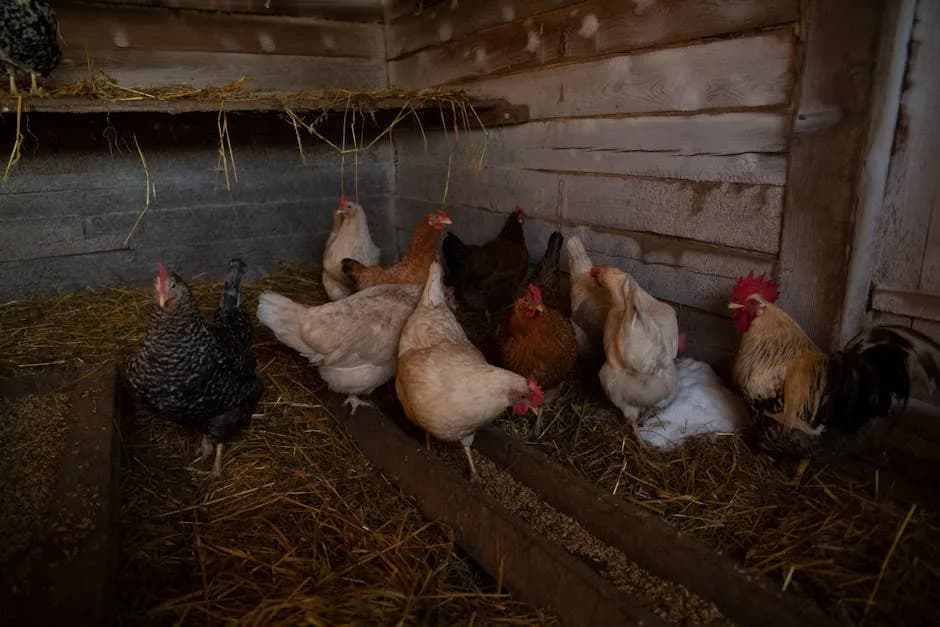
How to Size a Coop for Your Flock
This is the number sellers hide. Chickens need real space or you get pecking, feather-picking, and dirty eggs. The standard rule:
- •Coop interior: 3 to 4 square feet per standard hen (2 sq ft for bantams).
- •Run/outdoor space: 8 to 10 square feet per hen minimum.
Apply that and the marketing math falls apart quickly.
| Flock size | Coop interior needed | Run needed | Coop sold as |
|---|---|---|---|
| 3 hens | 9 to 12 sq ft | 24 to 30 sq ft | often "6 chickens" |
| 5 hens | 15 to 20 sq ft | 40 to 50 sq ft | often "8 to 10 chickens" |
| 8 hens | 24 to 32 sq ft | 64 to 80 sq ft | often "12 chickens" |
| 12 hens | 36 to 48 sq ft | 96 to 120 sq ft | needs a walk-in |
The pattern: cut the seller's capacity claim roughly in half and you land near the honest number. Our how big should my chicken coop be guide has the full sizing math, including how much you can shrink the coop when birds free-range most of the day.
Features That Actually Matter
Ignore the paint color and the cute weathervane. These are the things that decide whether you are happy in two years.
Hardware cloth, not chicken wire. This is the single most important feature. Chicken wire keeps chickens in; it does not keep predators out. Raccoons pull birds through it and reach through gaps. Look for 1/2-inch hardware cloth on every opening, or plan to add it. Our chicken predators guide explains why this matters and how to close the gaps most coops leave.
Ventilation you can adjust. Chickens produce a lot of moisture and ammonia. A coop needs vents near the roofline, ideally covered and adjustable, to release humid air without creating a draft on roosting birds. A sealed box coop leads to frostbite and respiratory problems.
External nesting box access. A hinged lid on the outside of the nesting boxes means you collect eggs without going inside. Small feature, daily payoff.
A roost bar off the floor. Chickens want to sleep up high. A 2-by-4 laid flat, set higher than the nesting boxes, keeps birds from sleeping (and pooping) in the nests.
A cleanable floor. A removable tray or a floor you can reach with a scraper makes weekly cleaning a 10-minute job instead of a chore you skip. Pair it with the right bedding, covered in our coop bedding guide.
A predator-proof door. A latch a raccoon cannot flip (they open simple hooks; our predator-proofing checklist covers latches), and ideally an automatic coop door so a forgotten dusk closing does not cost you the flock.
What a Chicken Coop Costs in 2026
Prices climbed with lumber and shipping over the last few years. Here is the honest range by tier.
| Tier | Price | What you get |
|---|---|---|
| Budget prefab | $150 to $350 | Thin pine, chicken wire, holds 2 to 3 real hens. Expect to upgrade or replace in 2 to 4 years. |
| Mid-range prefab | $400 to $900 | Thicker wood, better mesh, holds 4 to 8. The sweet spot for most keepers. |
| Premium/walk-in | $1,000 to $2,500 | Heavy lumber, hardware cloth, walk-in access, 10-plus year lifespan. |
| Metal walk-in | $200 to $500 | Big covered run, cheap frame, needs mesh and winter upgrades. |
| DIY build | $150 to $600 | Materials only; you supply labor and tools. |
Add roughly $100 to $250 for the extras almost everyone buys within the first month: a hanging feeder and waterer, hardware cloth to fix the mesh, an automatic door, and bedding. Our cost of raising chickens breakdown folds the coop into the full first-year budget. If you want to keep the total under a set number, our best chicken coops under $500 guide is built around that ceiling.
Red Flags in Cheap Coop Listings
The $150 coop is tempting. Here is how to read the listing before you regret it.
- •"Up to X chickens" with no dimensions. If a seller will not give interior square footage, assume the coop holds half the claim.
- •Chicken wire described as "wire mesh" or "safety fence." That is not predator protection. Budget to re-mesh it.
- •Thin, unfinished fir or pine. Untreated softwood under 0.4 inches thick warps and rots within a couple of wet seasons.
- •No ventilation shown in photos. A sealed box is a frostbite and ammonia trap.
- •Nesting boxes at the same height as the roost. Birds will roost and poop in the nests, fouling eggs.
- •Hundreds of reviews mentioning "smaller than expected." Believe them. Overstated size is the number-one coop complaint.
None of these mean "never buy budget." They mean budget you a weekend and $60 in hardware cloth to make a cheap coop safe.

Best Coops by Budget and Need
Rather than repeat full reviews here, this is the short version of where each kind of buyer should look. Each link goes to a tested roundup.
Tight budget, small flock. A compact wooden prefab plus a mesh upgrade. Start with our coops under $500 picks. A model like a compact A-frame prefab coop covers 2 to 4 hens if you add hardware cloth.
Most backyard keepers. A mid-size wooden prefab from the best Amazon coops list, sized honestly for 4 to 6 hens.
Larger flock or cold climate. A wooden walk-in. See the walk-in coop guide; an OverEZ wooden walk-in holds a real 10 to 15 birds and lasts.
Maximum run space on a budget. A VEVOR metal walk-in, with the mesh and winter upgrades noted above.
Rotational grazing. A mobile coop or tractor for 2 to 6 birds you move every few days.
Buy Prefab or Build Your Own?
Prefab wins on convenience and speed. Building wins on cost per square foot, custom sizing, and quality if you use good materials. A DIY 4-by-8 walk-in in treated lumber and hardware cloth runs $300 to $500 in materials and outperforms most $900 prefabs, but it takes a weekend and basic carpentry.
Build your own if you own the tools, want a specific size, and enjoy the project. Buy prefab if you want chickens in the coop this month. Our how to build a chicken coop guide has plans and a cut list if you lean toward building.
New, Used, or Local Build?
New prefab is predictable and warrantied but priced at retail. Used coops from local listings are the value play, often half price for a heavier build than you would buy new, as long as you inspect for rot, red mites in the roost cracks, and predator damage at the seams. A local carpenter's custom coop sits in the middle: more than prefab, less than a national specialty brand, and built to your yard.
For a used coop, treat it before your birds move in: scrub it, let it dry fully, and dust the cracks and roost ends for mites. A cheap used coop plus a can of poultry-safe dust is still a great deal.
Setup and Placement Checklist
Where you put the coop matters as much as which one you buy.
- •Well-drained ground. Avoid low spots that turn to mud. Standing water breeds disease and smell.
- •Partial shade. Morning sun, afternoon shade. Heat kills chickens faster than cold.
- •Close to a water source. You will haul water daily; make it short.
- •Level base. A coop that racks or twists on uneven ground develops gaps predators exploit.
- •A predator apron. Bury hardware cloth or lay it flat around the base to stop diggers.
- •Line of sight from the house. You will notice problems sooner, and a coop camera helps when you cannot be there.
Common Mistakes Buyers Make
Buying for today's flock, not next year's. Chicken math is real. Almost everyone adds birds. Size up one tier from what you think you need.
Trusting the capacity claim. Halve it. A "6-hen" coop is a comfortable 3-hen coop.
Skipping the mesh upgrade. The cheapest coop with proper hardware cloth beats the fanciest coop with chicken wire the first time a raccoon visits.
Ignoring ventilation. Sealed coops cause frostbite in winter and heat stress in summer. You want airflow up high, no draft down low.
Forgetting the run. The coop is where they sleep and lay. The run is where they live. Undersize the run and you get bored, feather-picking, unhappy birds.
Placing it in a low, wet spot. Drainage problems are the fastest way to a smelly, sick flock.
Frequently Asked Questions
How much does a good chicken coop cost? For most backyard flocks of 3 to 6 hens, a solid mid-range wooden prefab runs $400 to $900. Budget prefabs start around $150 but usually need a mesh upgrade to be safe. Premium walk-in coops that last a decade or more run $1,000 to $2,500.
How many chickens fit in a coop for sale online? Roughly half the seller's claim. Coops need 3 to 4 square feet of interior space per standard hen, so a coop advertised for 6 chickens comfortably holds about 3. Always check the interior dimensions, not the headline number.
Where is the cheapest place to buy a chicken coop? Used listings on local marketplaces are usually the best value, often half retail for a heavier build. For new coops, Amazon and farm stores are competitive. The cheapest new coop is rarely the best value once you add the hardware cloth it needs.
Are metal chicken coops any good? Metal walk-in coops give you the most run space per dollar and suit mild climates. Their weak points are chicken wire instead of hardware cloth and poor winter insulation, so plan to upgrade the mesh and add an insulated hen box.
Can I buy a chicken coop and chickens together? Yes. "Chicken and coop for sale" combo listings usually come from someone leaving the hobby and can be a real bargain. Inspect the coop for rot and mites, and check that the birds look healthy, bright-eyed, and active before you commit.
What size coop do I need for 6 chickens? Plan on 18 to 24 square feet of interior coop space and 48 to 60 square feet of run for 6 standard hens. That is larger than most prefab "6-hen" coops, so size up or choose a small walk-in.
Should I buy or build a chicken coop? Buy prefab if you want chickens housed this month and value convenience. Build if you own tools, want a custom size, and want more coop per dollar. A DIY walk-in in good lumber often beats a pricier prefab.
What is the most important feature to look for? Hardware cloth, not chicken wire, on every opening. Predators are the leading cause of flock loss, and the mesh is what stands between a raccoon and your birds. Everything else is secondary to keeping the coop actually closed.
Sources
- •Penn State Extension, Small-Scale Poultry Housing (space, ventilation, and predator guidance)
- •University of Minnesota Extension, Raising chickens for eggs (coop and run space per bird)
- •Merck Veterinary Manual, Housing and Management of Backyard Poultry (ventilation and health)
- •USDA APHIS, Defend the Flock: Biosecurity (siting and flock protection)
Related Guides
Best Chicken Coops Under $500 (2026 Buyer's Guide)
The best chicken coops on Amazon under $500 in 2026: an $88 starter, the $200 Aivituvin, a $360 coop-and-run, and a $400 walk-in, all checked in stock.
Gear ReviewsBest Walk-In Chicken Coops (2026 Buyer's Guide)
The best walk-in chicken coops for 6 to 20 birds in 2026: OverEZ Large and XL, a $400 wooden walk-in, and metal runs with real hardware cloth, sizes verified.
Gear ReviewsBest Amazon Chicken Coops 2026: The 6 That Aren't Junk
Most Amazon chicken coops are thin plywood and misleading capacity claims. The 6 worth buying in 2026, re-verified in September, with the mods each one needs.
Gear ReviewsBest Chicken Egg Incubators: 2026 Buyer's Guide
The best chicken egg incubators for 2026 reviewed and ranked. 5 models from $50 to $400 across capacity, features, and hatch-rate reliability.