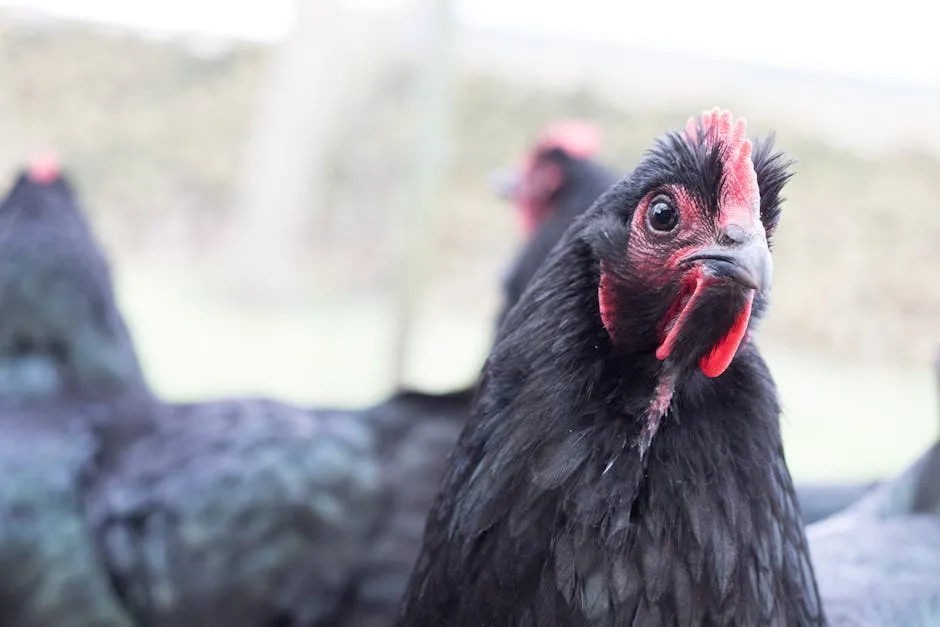
Black Australorp vs Australorp: Are They Different?
Black Australorp and Australorp are the same bird in the US. Here is what the name really means, the other color varieties, and how to spot a true one.
Researched from university extension, USDA, and veterinary sources. How we research.
Affiliate Disclosure: This article may contain affiliate links. If you buy something through these links, we earn a small commission at no extra cost to you. Full disclosure.
If you have shopped for chicks lately, you have probably seen the same bird listed two ways. One hatchery calls it an "Australorp." The feed store down the road calls it a "Black Australorp." A breeder you found online lists "Blue Australorp" and "White Australorp" too. So which is the real one, and are you about to buy two different breeds by accident?
Short version: in the United States, "Black Australorp" and "Australorp" almost always mean the exact same chicken. The word "Black" is a color label, not a separate breed. But the full story is a little more interesting than that, because the Australorp does come in other colors once you look past the American standard. This guide clears up the naming, lists every color variety, and shows you how to tell a true Australorp from the black look-alikes that get sold under the same name.
What You'll Learn
- •The short answer
- •Why "Black Australorp" means the same as "Australorp"
- •Every Australorp color variety
- •Do the colors lay or behave differently?
- •How to spot a true Black Australorp
- •Egg production you can expect
- •Temperament, care, and cold hardiness
- •Price and availability
- •Which should you buy?
- •Common mistakes buyers make
- •FAQ
The Short Answer
Australorp: The breed. A heavy, dual-purpose Australian chicken bred from Black Orpingtons for record egg production. When an American hatchery says "Australorp" with no color attached, they mean the black variety, because black is the only color the American Poultry Association recognizes.
Black Australorp: The same breed, with the color spelled out. People and sellers add "Black" because it is the standard color and because it helps separate the bird from black look-alikes like the Jersey Giant. There is no difference in breed, eggs, or temperament between a chick sold as "Australorp" and one sold as "Black Australorp" in the US.
The other colors: Blue, White, Splash, Buff, and a few more exist, but they are recognized in Australia and South Africa, not by the American Poultry Association. In the US they are rare and sold by a handful of specialty breeders. They are still Australorps, just in colors the American standard does not list.
So if you were worried you might be comparing two breeds, relax. You are comparing one breed and its color names. The rest of this guide explains how that happened and what to actually watch for when you buy.
Why "Black Australorp" Means the Same as "Australorp"
The Australorp was developed in Australia in the late 1800s and early 1900s from imported Black Orpingtons, crossed with Rhode Island Reds, Minorcas, White Leghorns, and Langshans. The goal was a hardy bird that out-laid the Orpington while keeping its calm nature. The breeders succeeded so well that a team of six hens once averaged 309.5 eggs each over 365 days, and one hen laid 364 eggs in 365 days. That record still gets quoted a century later. You can read the full history in our Australorp complete breed guide.
Because the parent stock was Black Orpington, the original and dominant color was black. When the American Poultry Association admitted the breed in 1929, it recognized only the Black Australorp. That single decision is why, in American hatchery catalogs, "Australorp" and "Black Australorp" are interchangeable. There is no plain "Australorp" of some other color sitting next to it on the shelf, so sellers use the two names for the identical bird.
You will see the same pattern with other breeds. A "Black Jersey Giant" and a "Jersey Giant" usually mean the same thing in a catalog that only stocks the black variety. The color word is there for clarity, not to flag a separate animal.
Every Australorp Color Variety
Here is where the breed gets more colorful than most American keepers realize. Different national poultry standards recognize different Australorp colors. The bird is the same breed in each case, just bred to a different plumage color.
| Color | Where recognized | How common in the US |
|---|---|---|
| Black | APA (US), Australia, UK, South Africa | Very common, the default |
| Blue | Australia, South Africa | Rare, specialty breeders only |
| White | Australia, South Africa | Rare |
| Splash | Australia (with the Blue line) | Rare |
| Buff | South Africa | Very rare in the US |
| Golden | South Africa | Very rare |
| Wheaten laced | South Africa | Very rare |
A few notes on the genetics. Blue, Black, and Splash are all part of the same color family. Breeding two Blue Australorps gives you roughly one quarter Black, one half Blue, and one quarter Splash chicks, which is why those three colors travel together in breeding programs. The Buff, Golden, and laced varieties come almost entirely out of South African lines and are something most US keepers will never see in person.
The takeaway: black is the standard you will find at any hatchery, and the other colors are real Australorps but treated as novelty stock in the United States.
Do the Colors Lay or Behave Differently?
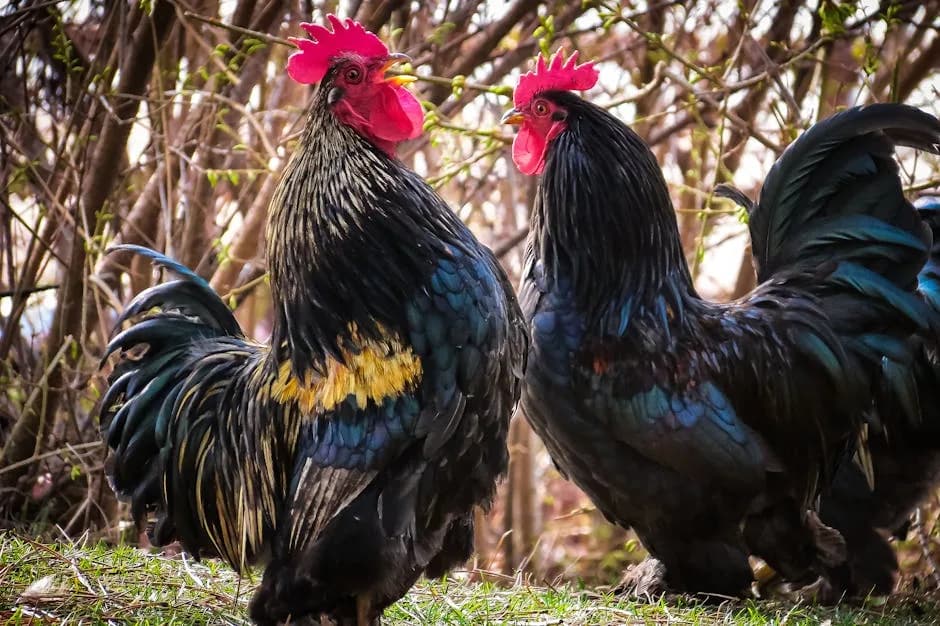
This is the practical question, and the answer is reassuring. Color in poultry is controlled by genes that have nothing to do with egg output, body size, or personality. A White Australorp and a Black Australorp from good stock should lay the same number of eggs and act the same way in the run.
That said, two things are worth knowing:
Breeder quality matters more than color. The rare colors come from smaller breeding pools. If a breeder has been selecting Blue Australorps for show feathers and not for laying, those birds may lay a little less than a production-bred Black Australorp from a large hatchery. This is a reflection of the breeding program, not the color itself.
Hatchery Black Australorps are bred for eggs. The big US hatcheries have selected their Black Australorp lines for production for decades. That is part of why the black bird is both the most common and the most reliable layer you will find. If eggs are your only goal, the standard Black Australorp is the safe pick.
So if someone tells you Blue Australorps lay fewer eggs, push back gently. The color is not the cause. The size and focus of the breeding flock is.
How to Spot a True Black Australorp
Because "Black Australorp" gets used loosely, plenty of black chickens get sold under the name that are not Australorps at all. Here is how to check.
Look for the green sheen. A true Australorp's black feathers throw a beetle-green iridescence in sunlight, not purple. Purple sheen points toward a different breed or a cross.
Check the legs and feet. Australorps have slate-blue to black legs with white soles and four toes. This is one of the best field marks.
Count on a single comb. Australorps carry a single red comb with five well-defined points and dark, nearly black eyes.
Watch the size. Australorp hens run about 6.5 pounds and roosters about 8.5 pounds. They are heavy but active foragers, not giants.
The black breeds people confuse with Australorps:
- •Jersey Giant: Much larger, with dark willow or black legs and yellow soles, not white. If the bird is enormous, it is probably a Jersey Giant.
- •Black Orpington: The Australorp's ancestor. Fluffier, heavier feathering, and pinkish-white legs rather than slate.
- •Black sex-link or black star: A hybrid layer, often with some red or gold leakage in the neck and breast feathers. True Australorps are solid black.
- •Black Copper Marans: Often have feathered legs and lay dark chocolate eggs, while Australorps have clean legs and lay light brown eggs.
If a feed store bin is labeled "Black Australorp" but the chicks have feathered legs or yellow foot soles, ask questions before you buy.
Egg Production You Can Expect
Whatever color you end up with, a healthy Australorp from decent stock is one of the best egg-laying breeds for a backyard flock. Expect 250 to 300 light brown, medium-to-large eggs per year, which works out to about five eggs per week from a hen in her prime.
A few things shape that number:
- •Age: Pullets usually start laying around 5 to 6 months. Production peaks in the first two years, then slowly tapers.
- •Daylight: Laying drops in late fall and winter as daylight shortens. Many keepers accept the natural rest; others add a few hours of supplemental coop light to keep eggs coming.
- •Feed: A complete layer feed with around 16 percent protein and added calcium keeps shells strong and output steady. A quality layer feed plus a separate dish of crushed oyster shell covers the basics.
- •Stress and molt: Hens pause laying during their annual molt and during heat waves or predator scares.
Australorps are also known for laying well into cold weather when many breeds slow down, which is part of their reputation as a workhorse layer.
Temperament, Care, and Cold Hardiness
Color does not change personality, and the Australorp personality is a big reason people keep them. These are calm, friendly, quiet birds that tolerate handling and do well with children. They sit comfortably near the bottom-to-middle of the pecking order and rarely start trouble, which makes them easy to mix into a flock. If you are choosing a first breed, they belong on any list of the best chicken breeds for beginners.
Care is straightforward for any Australorp color:
- •Space: Give each bird at least 4 square feet inside the coop and 8 to 10 square feet in the run. They are heavy and appreciate room.
- •Roosts and nest boxes: Standard roosts work fine. One nest box per three to four hens keeps the peace.
- •Cold: Their heavy body and tight feathering make them genuinely cold-hardy. They handle winter well with a dry, draft-free coop. Our guide on keeping chickens warm in winter covers the details, but Australorps need less help than most.
- •Heat: The same dense feathering that helps in winter means they need shade, ventilation, and cool water in summer heat.
- •Comb care: That single comb can be prone to frostbite in hard cold. A thin coat of petroleum jelly on the points helps in deep-freeze regions.
Roosters of any color are calm by breed standards but still crow and still need space. If you are deciding whether to keep one, see do you need a rooster.
Price and Availability
This is the one place where color genuinely changes your experience, because it changes the price and how hard the bird is to find.
Black Australorp: Cheap and everywhere. Expect roughly $4 to $7 per chick at hatcheries and feed stores in spring. Day-old straight-run birds sit at the low end, sexed pullets a bit higher. Availability is excellent from late winter through early summer.
Blue, White, and Splash Australorp: Specialty stock. Expect $10 to $25 per chick or more, and expect to order from a dedicated breeder rather than a big hatchery. Hatching eggs are sometimes the only option, and waitlists are common.
Buff, Golden, and laced Australorp: Very rare in the US. If you want one of these you will likely be importing genetics or buying from a tiny circle of show breeders. Treat them as a collector's project, not a practical layer purchase.
The pattern is simple: the more unusual the color, the smaller the breeding pool, the higher the price, and the longer the wait. None of that buys you a better layer. It buys you a rarer-looking one.
Which Should You Buy?
Match the bird to your goal.
You want eggs and an easy first flock. Buy the standard Black Australorp from a hatchery or feed store. It is the cheapest, most available, and most production-tested version of the breed. This is the right call for the large majority of backyard keepers.
You want a striking flock and you do not mind the cost. A few Blue or White Australorps mixed into a flock of Blacks look beautiful and lay just as well, assuming you buy from a breeder who selects for production. Budget more and order early.
You are getting into showing or preservation breeding. Then color and lineage matter, and you will want to work directly with a breeder who can show you their stock and their standard. Decide your target color before you buy, since the color families breed true in predictable ratios.
For nearly everyone reading this, the honest recommendation is the plain Black Australorp. It is the same wonderful breed as every fancier color, at a fraction of the price and ten times the availability.
Common Mistakes Buyers Make
Thinking "Black Australorp" is a premium upgrade. It is not. It is the standard bird with its color spelled out. Do not pay extra for the word "Black."
Assuming any big black hen is an Australorp. Jersey Giants, Black Orpingtons, and black sex-links all get mislabeled. Check the legs, soles, and feather sheen before you decide.
Expecting the rare colors to lay better. They do not. If anything, show-bred rare colors can lay slightly less because the breeding focus was feathers, not eggs.
Buying "Blue Australorp" expecting every chick to be blue. Blue does not breed true. A Blue-to-Blue pairing produces Black, Blue, and Splash chicks in roughly a 1-2-1 ratio. If you specifically want blue birds, plan for the math.
Skipping the breeder question on rare colors. With small breeding pools, quality varies a lot. Ask about laying records and flock health before paying specialty prices.
Frequently Asked Questions
Is a Black Australorp the same as an Australorp? In the United States, yes. Black is the only Australorp color the American Poultry Association recognizes, so hatcheries and feed stores use "Australorp" and "Black Australorp" to mean the identical bird.
Are there other colors of Australorp? Yes. Blue, White, and Splash are recognized in Australia, and Buff, Golden, and laced varieties exist in South Africa. They are all the same breed in different plumage colors and are rare in the US.
Do Blue or White Australorps lay fewer eggs than Black ones? Not because of their color. Color genes do not affect laying. Any difference comes from the breeding program, since rare colors often come from smaller pools selected for appearance rather than production.
How do I tell an Australorp from a Jersey Giant? Australorps have slate legs with white foot soles and weigh around 6.5 to 8.5 pounds. Jersey Giants are much larger with darker legs and yellow soles. Size and sole color are the quickest tells.
What color eggs do Australorps lay? Light brown eggs, regardless of feather color. Expect 250 to 300 medium-to-large eggs per year from a healthy hen in good lay.
Why is black the standard Australorp color in America? The breed descends from Black Orpingtons, so black was the original and dominant color. The American Poultry Association admitted only the Black Australorp in 1929, and that has stayed the US standard.
Are rare-color Australorps worth the extra money? Only if you want the look or plan to show or breed them. They cost much more and lay no better than a standard Black Australorp, so for pure egg production they are not worth the premium.
Can I get blue chicks by breeding two blue Australorps? Some, not all. Blue is a dilution gene that does not breed true. Two blues produce roughly one quarter black, half blue, and one quarter splash chicks.
Sources
- •The Livestock Conservancy. Australorp breed page. https://livestockconservancy.org/heritage-breeds/heritage-breeds-list/australorp-chicken/
- •The American Poultry Association. Standard of Perfection (recognized varieties reference). http://www.amerpoultryassn.com/
- •University of Kentucky, eXtension Poultry. Small and Backyard Flocks resources. https://poultry.extension.org/
- •Oklahoma State University. Breeds of Livestock, Poultry. https://breeds.okstate.edu/poultry/
Related Guides
Ayam Cemani Breed Guide: The All-Black Chicken (2026)
Ayam Cemani explained: the Indonesian breed that is black to the bone, the gene behind it, cream eggs, weights, temperament, prices, and what is myth.
BreedsBlack Sex Link Chicken: Eggs, Size, Temperament & Genetics
The Black Sex Link is a Barred Rock x Rhode Island Red cross you can sex at hatch. Eggs per year, adult weight, temperament, and how the color trick works.
BreedsBlack Copper Marans: Complete Breed Guide
Black Copper Marans lay the darkest chocolate-brown eggs of any chicken. Guide to egg color, appearance, temperament, hatchery vs breeder, and care.
BreedsAustralorp: Complete Breed Guide (Eggs, Temperament, Care)
Australorps lay 250+ light brown eggs per year and thrive in backyard flocks. Get the full breed profile with care tips, history, and real pros and cons.