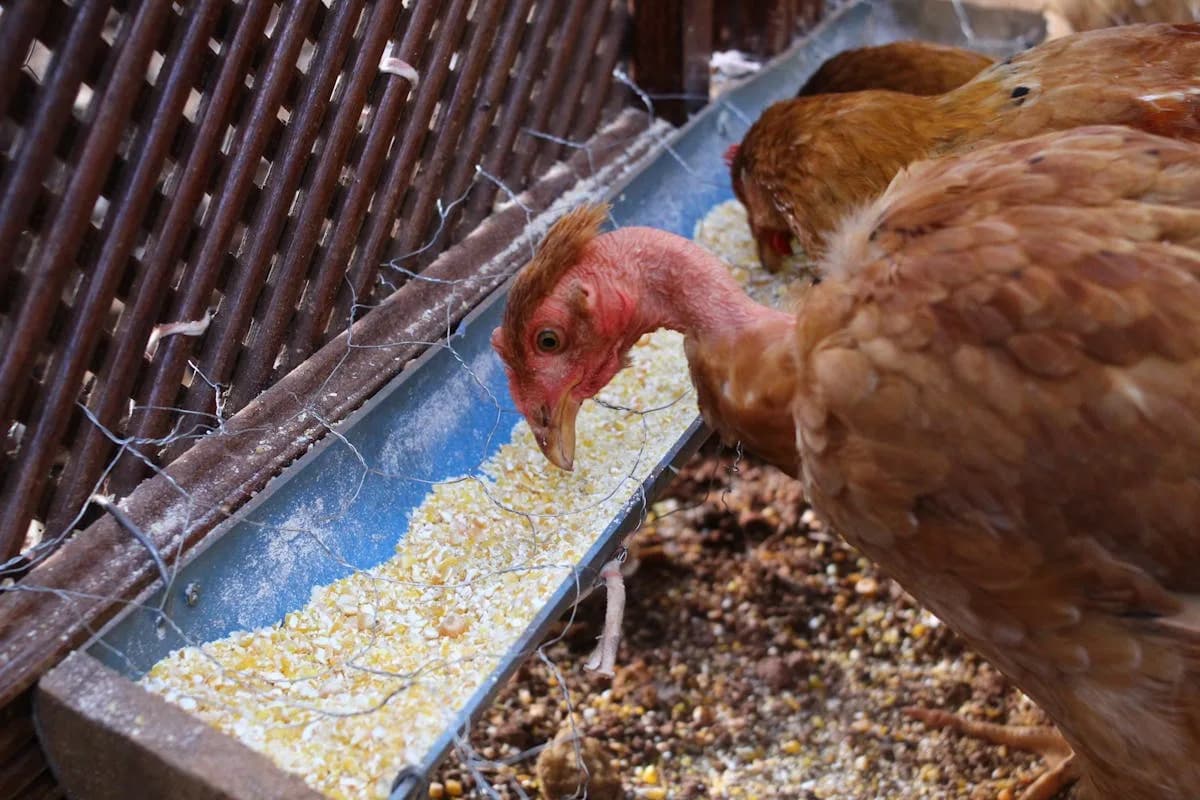
Best Treadle Chicken Feeders to Stop Rats (2026)
Rat-proof, no-waste chicken feeders compared: treadle picks from Grandpa's, RentACoop and more, with sizes, prices, and what actually keeps rodents out.
Researched from university extension, USDA, and veterinary sources. How we research.
If you keep chickens long enough, you will end up feeding rats. An open feeder left out overnight is a free buffet for mice, rats, sparrows, and squirrels, and the feed your hens scratch onto the ground just makes the problem worse. A treadle feeder fixes both at once: the lid stays shut until a chicken steps on the pedal, so pests cannot reach the feed and your birds cannot fling it everywhere.
Our top pick: Grandpa's Feeders 20 lb Treadle Feeder. Galvanized steel, 20-plus years on the market, and the feeder most keepers end up buying after they get tired of fighting rodents. Around $220.
Best value: RentACoop 25 lb Treadle Feeder. More capacity than Grandpa's 20 lb for less money, from a trusted poultry brand. Around $180.
We keep chickens ourselves and have read through years of keeper reports on which of these feeders hold up and which jam, rust, or get defeated by clever rats. Here is what actually works, from the premium pick down to the budget option, plus an honest look at the cheaper "rat-proof" feeders that are really just no-waste feeders.
Quick Answer: Best Rat-Proof and No-Waste Feeders
| Need | Pick | Price |
|---|---|---|
| Best overall treadle | Grandpa's 20 lb | ~$220 |
| Best value treadle | RentACoop 25 lb | ~$180 |
| Best for large flocks | Grandpa's 40 lb | ~$270 |
| Best large-flock value | Hsmanchry 40 lb | ~$189 |
| Budget / biggest capacity | Abustle 52 lb | ~$130 |
| Best compact (small flock) | Roamwild PestOff | ~$50 |
| Best bulk no-waste | VOMYRAL 55 lb | ~$80 |
What You'll Learn
- •How We Picked
- •How Treadle Feeders Work (and What "Rat-Proof" Really Means)
- •Best Treadle Chicken Feeders
- •No-Waste Port Feeders: Honest Expectations
- •How to Pick the Right Size for Your Flock
- •How to Train Your Flock to Use a Treadle Feeder
- •What a Rat-Proof Feeder Really Costs
- •Common Mistakes
- •Frequently Asked Questions
How We Picked
A rat-proof feeder is only worth buying if it actually keeps rats out, holds up outdoors, and your chickens will use it. We weighed three things: whether the design genuinely excludes pests (a real step-on treadle, not just a rain hood), build quality for years of weather, and value at each size so there is a pick whether you have $50 or $270 to spend.
We also confirmed every product link below is in stock and points to the exact item described. Gear listings change often, and a direct link is only useful if it works. Where a feeder we liked went out of stock, we left it off rather than sending you to a dead page.
No paid placements and no free units in exchange for ranking. These are the feeders we would spend our own money on to stop feeding the neighborhood rodents.
Affiliate Disclosure: This article contains affiliate links to Amazon. If you buy something through these links, we earn a small commission at no extra cost to you. We only recommend products we genuinely think are worth your money. Full disclosure.
How Treadle Feeders Work (and What "Rat-Proof" Really Means)
A treadle feeder has a lid connected to a weighted step plate. When a full-grown chicken stands on the plate, its weight tips a counterbalance and the lid swings open. When the bird steps off, the lid closes and seals the feed inside. A sparrow, mouse, or rat is too light to trip the mechanism, so they never get at the grain. That closing lid is the whole point, and it is what separates a real rat-proof feeder from the rest.
This matters because the word "rat-proof" gets stamped on a lot of feeders that are not. Plenty of bulk metal feeders are sold as "rat proof" when they are really no-waste feeders: they have narrow ports and a rain hood that stop your hens from billing feed onto the ground, which cuts waste and keeps the feed dry. That is a genuine upgrade over an open trough. But the ports stay open all night, and a determined rat will climb right in. No-waste is not the same as pest-proof.
So read the design, not the label:
- •Treadle (step-on lid): Excludes rodents and wild birds completely once your flock is trained. The premium choice, and the only type we would trust to be left out overnight.
- •Weight-activated ports: A middle ground. The port opens under a bird's weight and closes when it leaves. Better than open ports, but lighter hens sometimes struggle to work them and small mice can occasionally defeat them.
- •No-waste bulk ports: Cuts spillage and keeps rain out, but the feed is always reachable. Close it up or bring it in at night if you have rodents.
If you have a rodent problem right now, buy a step-on treadle feeder. If your only issue is hens wasting feed, a no-waste port feeder will do and costs less. The rest of this guide is organized that way: the treadle feeders first, then the honest no-waste options. For the full anti-rodent playbook beyond the feeder, see our guide on how to stop rats and mice eating chicken feed.
Best Treadle Chicken Feeders
Treadle Feeders at a Glance
| Feeder | Capacity | Feeds | Material | Price | Best For |
|---|---|---|---|---|---|
| Grandpa's 20 lb | 20 lb | ~6 birds, 10 days | Galvanized steel | ~$220 | Best overall |
| RentACoop 25 lb | 25 lb | 6-10 birds | Galvanized steel | ~$180 | Best value |
| Grandpa's 40 lb | 40 lb | 6-12 birds | Galvanized steel | ~$270 | Large flocks |
| Hsmanchry 40 lb | 40 lb | 6-12 birds | Galvanized steel | ~$189 | Large-flock value |
| Abustle 52 lb | 52 lb | 8-12 birds, 14 days | Galvanized steel | ~$130 | Budget / capacity |
1. Grandpa's Feeders 20 lb Treadle: Best Overall
Grandpa's Feeders 20 lb Automatic Treadle Feeder. Around $220 (20 lb)
Grandpa's has been making treadle feeders for more than two decades, and this is the feeder other brands copy. The galvanized steel body shrugs off weather and chewing rodents, the lid keeps rain off the feed, and the counterweighted step only opens for a bird that weighs enough to work it. The 20-pound size feeds about six hens for roughly ten days, so you are refilling once a week or so instead of daily.
Why it works: The step-and-lid geometry is dialed in from years of refinement. It opens smoothly for standard hens, closes fully behind them, and does not jam the way cheaper knockoffs sometimes do. If you want one feeder that solves the rodent problem and lasts a decade, this is it.
One thing to know: It is a real investment up front, and very light breeds or young birds take a little longer to learn it. Train the flock before you count on it to stay closed overnight (see the training steps below).
2. RentACoop 25 lb Treadle: Best Value
RentACoop 25 lb Automatic Treadle Feeder. Around $180 (25 lb)
RentACoop is a trusted name in backyard poultry gear, and their treadle feeder gives you more capacity than Grandpa's 20-pound model for less money. It is galvanized and weatherproof, the step blocks rats, mice, and wild birds, and 25 pounds of feed carries a flock of six to ten birds comfortably between fills. This is the one we point most keepers toward when the Grandpa's premium is hard to justify.
Why it works: You get the same step-on protection and metal durability at a friendlier price, with a slightly larger hopper. For a typical backyard flock, it hits the sweet spot of capacity, build quality, and cost.
One thing to know: As with any treadle, mount it on a level, solid surface. If it rocks, the counterweight will not seat properly and the lid can hang open or snap shut too hard.
3. Grandpa's Feeders 40 lb Treadle: Best for Large Flocks
Grandpa's Feeders 40 lb Automatic Treadle Feeder. Around $270 (40 lb)
Same proven Grandpa's build, double the feed. The 40-pound hopper feeds six to twelve birds and stretches your refill schedule even further, which is the point if you run a bigger flock or just hate chores. It is the priciest feeder here, but it is built to outlast several cheaper ones.
Why it works: For a dozen hens, the larger hopper means you are topping it off every week or two instead of every few days, and the heavier body sits planted on the ground. The galvanized steel handles rain, snow, and years of use.
One thing to know: It is heavy and takes up more floor space, so plan where it goes in the run. Overkill for three or four birds; step down to the 20-pound model instead.
4. Hsmanchry 40 lb Treadle: Best Large-Flock Value
Hsmanchry 40 lb Treadle Chicken Feeder. Around $189 (40 lb)
If you want 40 pounds of capacity without the Grandpa's premium, the Hsmanchry is a strong value. It is galvanized steel with a weatherproof lid and a clear window so you can see the feed level at a glance without lifting anything. Same step-on, rat-proof idea in a larger, cheaper package.
Why it works: The visible window is a genuinely useful touch, and the big hopper suits a large flock. It costs well under the name-brand 40-pound feeders while covering the same job.
One thing to know: Fit and finish on value treadle feeders is not always as tight as Grandpa's, so check that the pedal moves freely out of the box and adjust the counterweight if the lid is slow to close. A few minutes of setup makes a difference.
5. Abustle 52 lb Treadle: Budget Pick and Biggest Capacity
Abustle 52 lb Automatic Treadle Feeder. Around $130 (52 lb)
This is the most feed for the least money on the list. At 52 pounds it holds more than any other feeder here, feeds eight to twelve birds for up to two weeks, and still uses a galvanized body, non-slip pedal, and weatherproof lid. For keepers who want long gaps between refills on a budget, it is hard to beat.
Why it works: You get treadle protection and huge capacity at the lowest price in the roundup. The non-slip pedal helps birds learn it, and the giant hopper means fewer trips to the feed bin.
One thing to know: A budget feeder this large needs a flat, firm base or the heavy full hopper can make the treadle action inconsistent. Give the counterweight a test after filling it, and train the flock patiently since a stiffer new pedal takes a little longer to master.
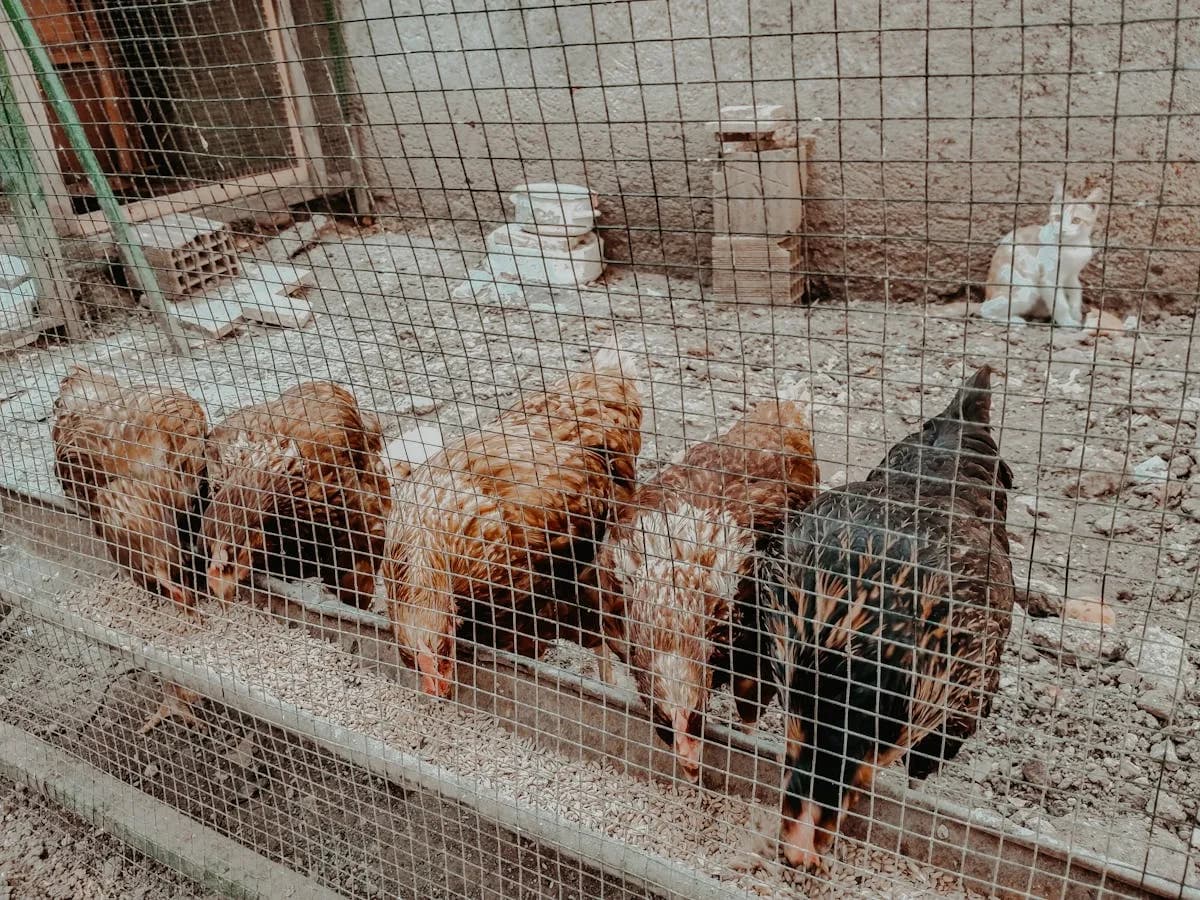
No-Waste Port Feeders: Honest Expectations
These two are not step-on treadle feeders, and we are listing them as what they are. They cut feed waste and keep rain out, which saves money and keeps feed fresh, but they do not lock rodents out overnight the way a treadle does. Buy them for waste control, not as a rodent fix, and close them up or bring them in at night if you have pests.
6. Roamwild PestOff: Best Compact for a Small Flock
Roamwild PestOff Rat Proof Chicken Feeder. Around $50 (8 lb)
The Roamwild is a compact, weatherproof feeder with spring-loaded ports that open under a chicken's weight and close when the bird steps away. At 8 pounds it suits a small flock of a few birds, and the price is a fraction of a full treadle feeder. If a big galvanized treadle is overkill for your two or three hens, this is a sensible smaller option.
Why it works: The weight-activated ports do reduce access for rats and wild birds compared to an open feeder, and the small footprint fits a compact coop or a mobile tractor.
One thing to know: Keeper reviews on the rat-proofing are mixed. Lighter hens and bantams sometimes have trouble working the ports, and small mice can occasionally still reach the feed. It is a step up from an open feeder for a couple of birds, not a guaranteed lock. If rats are already a problem, a step-on treadle is the surer bet.
7. VOMYRAL 55 lb No-Waste Port Feeder: Best Bulk No-Waste
VOMYRAL 55 lb No-Waste Port Feeder. Around $80 (55 lb)
For a large flock that wastes feed, this high-capacity metal feeder holds 55 pounds across eight ports, with adjustable legs to set the height and a window to check the level. The ports and rain hood stop hens from billing feed onto the ground, so you refill less and waste less. It is a lot of capacity for the money.
Why it works: The eight ports let plenty of birds eat at once without crowding, the adjustable legs raise it to back height so chickens cannot scratch bedding in, and the no-waste design pays for itself in saved feed over a big flock.
One thing to know: Despite the "rat proof" label, the ports stay open, so this is a no-waste feeder, not a nighttime rodent lock. If you have rats, pair it with good feed storage and either bring it inside at night or run a treadle feeder alongside it.
How to Pick the Right Size for Your Flock
Match the hopper to your flock so you are not refilling daily or hauling around more feeder than you need:
- •2 to 4 chickens: A 20 lb treadle (or the compact Roamwild) is plenty.
- •4 to 8 chickens: 20 to 25 lb treadle, like the Grandpa's 20 or RentACoop 25.
- •8 to 12 chickens: 40 to 52 lb, like the Grandpa's 40, Hsmanchry 40, or Abustle 52.
- •12+ chickens: A 40 lb or larger feeder, or two feeders placed apart so lower-ranking hens are not blocked out.
A note on refill timing: The "feeds X birds for Y days" numbers on these feeders assume the feeder is the flock's only food. If your birds also free range or get kitchen scraps, the feed lasts longer. It is better to size up slightly so you have buffer room, especially heading into winter when hens eat more to stay warm.
If your flock is larger than six birds, consider two feeding stations. Chickens enforce a pecking order, and a single feeder lets a dominant hen guard it and keep timid birds from eating enough.
How to Train Your Flock to Use a Treadle Feeder
A treadle feeder only protects your feed once the birds know how to use it, and an untrained lid left propped open is just an expensive open feeder. Most chickens learn in three to seven days. Younger birds pick it up faster than old hens set in their ways.
- •Set the new treadle feeder next to the old feeder, then take the old one away so the flock has to learn the new setup.
- •Prop the treadle lid fully open for the first two or three days so birds can see and reach the feed without stepping on the pedal.
- •Scatter a little scratch on and around the step so the chickens get comfortable standing on the pedal.
- •Lower the prop a little each day over about a week so the lid closes gradually and the birds learn to work the treadle.
- •Once most of the flock is feeding confidently, remove the prop so the lid closes fully between visits and locks rodents out.
- •Check the counterweight so the lid stays shut under a sparrow or rat but opens easily for a full-grown hen, and bring any open feed inside at night until the flock is trained.
Watch for one or two birds that never quite get it. A timid hen sometimes needs a few extra days, or a lighter counterweight setting, before she will commit to standing on the step.
What a Rat-Proof Feeder Really Costs
A treadle feeder is a bigger up-front spend than a hanging tube feeder, so it is fair to ask whether it pays off. For most keepers fighting rodents, it does, and faster than you would think.
| Open feeder | Treadle feeder | |
|---|---|---|
| Up-front cost | ~$30 to $60 | ~$130 to $270 |
| Feed lost to pests and spillage | $5 to $20+ per month | Near zero |
| Rodent control effort | Ongoing | Removes the food source |
| Lifespan outdoors | 2 to 5 years (plastic) | 10+ years (galvanized) |
If rats and wild birds are eating $10 to $20 of feed a month, a treadle feeder pays for itself inside a year, then keeps saving after that. You also stop feeding the rodent population, which is the real win: cut off the free meal and the rats move on, instead of breeding up into an infestation that gnaws your coop and draws predators. Rodents push hardest into coops in late fall and winter when natural food runs short and your warm, feed-filled coop looks like a hotel, so this is a good season to close the buffet.
Pair the feeder with the other two feed-management basics and you rarely see a rat at all: store bulk feed in sealed metal containers, and keep spilled grain cleaned up around the coop.
Common Mistakes
Leaving the lid propped open past training. A treadle feeder with the lid tied open is just an open feeder that cost you $200. Finish the training and let it close.
Setting it on uneven ground. If the feeder rocks, the counterweight will not seat right and the lid hangs open or slams. Level, firm footing is not optional.
Buying too small to save money. A feeder you refill daily tempts you to leave extra out overnight, which is exactly what you were trying to avoid. Size up.
Trusting a "rat-proof" label on an open-port feeder. If it does not have a lid that closes when the bird leaves, it is a no-waste feeder, not a rodent lock. Read the design.
Still leaving feed out overnight. Even a trained treadle feeder is most airtight when you also pull any open supplemental feed at dusk. Good feeders plus good habits beat either one alone. Our feeders and waterers guide covers the full daily-use setup.
Frequently Asked Questions
Do treadle feeders really keep rats out?
Yes, a real step-on treadle feeder keeps rats, mice, and wild birds out once your flock is trained to use it, because the lid stays closed until a bird heavy enough to work the pedal steps on it. The catch is "real treadle." Feeders sold as rat-proof that only have narrow ports and a rain hood do not close, so rodents can still reach the feed at night.
How long does it take chickens to learn a treadle feeder?
Most flocks learn in three to seven days. Prop the lid open at first so birds associate the feeder with food, then lower the prop a little each day until they are stepping on the pedal themselves. Younger birds usually figure it out faster than older hens.
What size treadle feeder do I need?
Match capacity to flock size: a 20-pound feeder suits four to six hens, 25 pounds covers six to ten, and 40 to 52 pounds handles eight to twelve birds or stretches refills on a smaller flock. Size up slightly if your birds depend on the feeder as their main food or if you are heading into winter, when they eat more.
Are cheap "rat-proof" feeders worth it?
The cheaper no-waste port feeders are worth it for cutting feed waste and keeping rain off, which saves money. They are not a reliable rodent lock, because the ports stay open overnight. If waste is your only problem, they are a fine, lower-cost choice. If you have rats, buy a step-on treadle.
Can a treadle feeder stay outside in the rain and snow?
Yes. The galvanized steel feeders here have weatherproof lids built to live outdoors year round. Galvanized steel also resists chewing rodents far better than plastic. Just set the feeder on level, firm footing so the treadle works smoothly, and brush snow off the lid so it is not frozen shut.
Will a treadle feeder work for ducks or bantams?
Standard-weight ducks can learn most treadle feeders, and several are rated for ducks and guinea fowl. Very light birds like bantams sometimes struggle to trip the heavier pedals, so look for a model with an adjustable counterweight and set it as light as the design allows. A compact weight-port feeder can be easier for small birds than a stiff full-size treadle.
How much feed will a treadle feeder save me?
If rodents and spillage are costing you $10 to $20 a month, a treadle feeder recovers its price within a year and keeps saving after that. The no-waste design also stops hens from billing feed onto the ground, which on an open feeder can waste a surprising share of every bag.
Do I still need to store my feed in metal cans?
Yes. The feeder protects the feed the birds are eating from, but your bulk feed bag is a separate target. Rats chew through paper and plastic easily, so keep bulk feed in a sealed metal container. A treadle feeder and sealed feed storage together remove both food sources rodents are after.
Where should I put the feeder, inside the coop or in the run?
Most keepers put the feeder in a covered part of the run rather than inside the coop, so feed and the pests it attracts stay out of the sleeping and nesting area. Keep it on level ground at about the height of the birds' backs, and make sure every bird in the pecking order can reach it. If you are still setting up, our beginner's guide to raising backyard chickens walks through coop and run layout.
Getting your feeder right is one of those changes that pays you back every single day, in saved feed and in rats you never have to deal with. For the full anti-rodent plan and the daily feeding setup, see our guides on stopping rats and mice and the best feeders and waterers, and read up on what to actually put in the feeder.
Sources:
- •Michigan State University Extension. Keeping rodents out of the coop. https://www.canr.msu.edu/news/keeping_rodents_out_of_the_coop
- •eXtension Poultry. Biosecurity and rodent control for small flocks. https://poultry.extension.org/
- •University of California IPM. Rats, Pest Notes Publication 74106. https://ipm.ucanr.edu/PMG/PESTNOTES/pn74106.html
- •Penn State Extension. Poultry housing and equipment. https://extension.psu.edu/animals/poultry
Product prices and availability are accurate as of the date shown and are subject to change. Any price and availability information displayed on Amazon at the time of purchase will apply to the purchase of this product.
Related Guides
Best Chicken Feeders and Waterers (2026 Reviews)
Top-rated chicken feeders and waterers for backyard flocks. Hanging, treadle, and nipple styles compared, with pros, cons, and pricing for every budget.
Gear ReviewsBest Chicken Coop & Run Covers for Winter (2026)
Clear vinyl windbreak tarps and heavy-duty waterproof run covers to block winter wind, snow, and rain without sealing in moisture. Top picks compared.
Gear ReviewsBest Chicken Coop Lights for Winter Laying (2026)
Automatic coop lights and timers that extend daylight to keep hens laying through winter. Solar, plug-in, and DIY picks compared, plus safe setup.
Gear ReviewsBest Chicken Wound Care Spray and Supplies (2026)
The best wound care sprays, gels, and supplies for treating bumblefoot, pecking wounds, vent prolapse, and frostbite in chickens. Vet-verified picks.