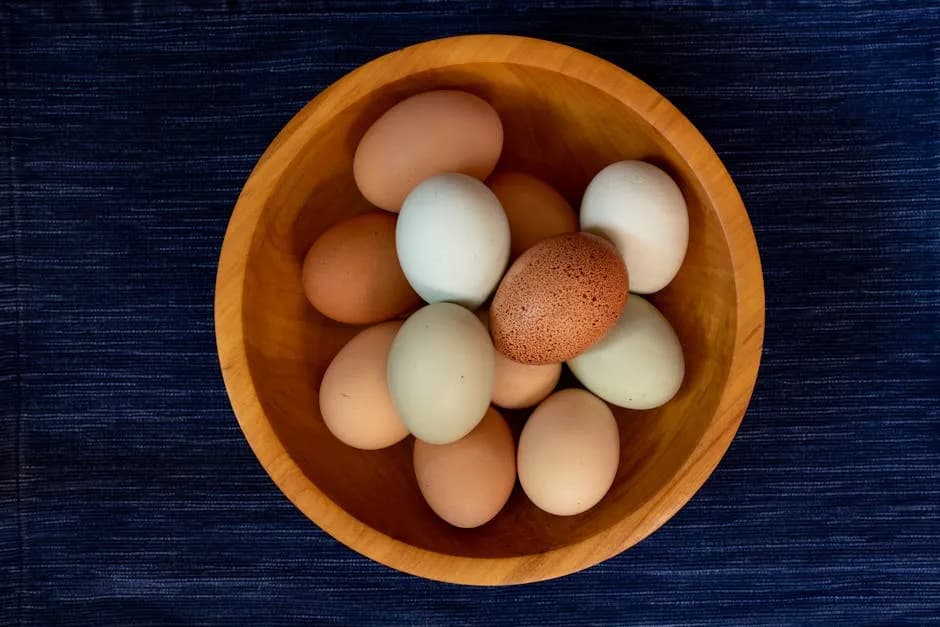
Best Egg Scales and Graders (2026 Reviews)
The best egg scales and graders for weighing and sorting eggs by USDA size. Mechanical graders and digital scales compared, with prices for every budget.
Researched from university extension, USDA, and veterinary sources. How we research.
Once your hens are laying well, two questions come up fast: what size are these eggs, and how do I label them for the people buying them? An egg scale answers both in a second. Whether you are sorting a basket into Large and Extra Large for your carton labels, dialing in humidity for a batch in the incubator, or just baking a cake that assumes a standard egg, the right scale takes the guessing out of it.
Our top pick: Kuhl Jiffy-Way Egg Grading Scale. The classic mechanical grader that sorts eggs into size classes in seconds, no batteries, built to last for years. Around $58.
Best digital pick: reflex Super Egg Scale. Exact grams to 0.1 g, rechargeable, and the right tool if you hatch or bake. Around $35.
We keep chickens and sell eggs, so this comes from sorting real baskets, not a spec sheet. Here is what works for grading, for hatching, and for the keeper who just wants one reliable scale.
Quick Answer: Best Egg Scales and Graders
| Need | Pick | Price |
|---|---|---|
| Best overall / for selling | Kuhl Jiffy-Way Grading Scale | ~$58 |
| Best balance-style grader | The Incredible Egg Scale | ~$45 |
| Best digital for grading | reflex Super Egg Scale | ~$35 |
| Best for hatching eggs | Incubator Warehouse Digital Scale | ~$24 |
| Best budget / all-purpose | Vitafit 11lb Digital Scale | ~$26 |
| Weigh live birds, not eggs | YUYUSO Poultry Weighing Sling | ~$18 |
What You'll Learn
- •How We Picked
- •Why Weigh Your Eggs?
- •Egg Size Chart: USDA Weight Classes
- •Types of Egg Scales and Graders
- •Best Egg Scales and Graders
- •Bonus: Weighing Your Birds, Not Just Eggs
- •How to Weigh and Grade Your Eggs
- •Common Egg-Weighing Mistakes
- •Frequently Asked Questions
How We Picked
An egg scale has one job, so we judged these on how well they do it and how little they get in the way. Accuracy came first: a grader that puts a Large egg in the Medium slot is worse than no grader at all. Speed mattered next, because sorting a full basket one egg at a time gets old unless the tool is quick. Then durability, since these live in a damp coop room or on a kitchen counter and get handled daily. Finally value, so there is a real pick whether you want a $25 scale or a lifetime grader.
We confirmed every product link points to the exact item described and reports in stock through the Amazon catalog as of this update. Egg-scale listings are a small market and sell out faster than mainstream gear, so where a pick runs low on stock we say so.
No paid placements and no free units for ranking. These are the scales we would buy to grade our own eggs.
Why Weigh Your Eggs?
You can keep chickens for years and never weigh an egg. But four situations make a scale worth the counter space.
Selling eggs by size. If you label cartons Large or Extra Large, or price by size, you need to know what you actually have. Backyard flocks lay a wide spread, from a pullet's first tiny eggs to the occasional double-yolk giant, and eyeballing them is unreliable. A scale lets you grade honestly and keep your cartons consistent, which is what repeat customers notice. Pair it with proper egg cartons for selling and a quick read of the rules in our guide to selling eggs legally.
Hatching. This is the reason serious incubator users own a precise scale. A chicken egg should lose about 13 percent of its starting weight between the day you set it and day 18, as moisture evaporates through the shell. Weigh eggs before setting and every few days after, and the trend tells you whether your incubator humidity is right. Too little weight loss means lower the humidity, too much means raise it. A kitchen scale that reads to 0.1 g makes this easy, and it pairs naturally with a good egg incubator.
Tracking pullets. A hen's first eggs are small and grow over her first few months of laying. Weighing a few eggs a week shows you a young flock is maturing on schedule, and a sudden drop in egg size across the flock can be an early hint of stress, heat, or a nutrition gap.
Baking. Recipes are written around a US Large egg, roughly 57 g in the shell or about 50 g of egg once cracked. If your hens lay jumbos or you are scaling a recipe up, weighing cracked egg gives you consistent results no matter what your flock hands you that morning.
Egg Size Chart: USDA Weight Classes
The USDA sorts shell eggs into six weight classes. Officially the standard is set by minimum net weight per dozen, which is why you will sometimes see weights listed per dozen rather than per egg. For a backyard seller, the practical approach is to weigh individual eggs against the per-egg figures below, which are the per-dozen minimums divided by twelve.
| Size class | Minimum per dozen | Per egg (approx.) |
|---|---|---|
| Jumbo | 30 oz | 71 g and up |
| Extra Large | 27 oz | 64 to 70 g |
| Large | 24 oz | 57 to 63 g |
| Medium | 21 oz | 50 to 56 g |
| Small | 18 oz | 43 to 49 g |
| Peewee | 15 oz | under 43 g |
A few things worth knowing. Because the official grade is a per-dozen weight, a carton can hold eggs that vary a little as long as the dozen hits the minimum, so a scale that grades individual eggs gives you a stricter, cleaner sort than the law requires. Large is the size most recipes and most buyers expect. And pullet eggs almost always start in the Small or Peewee range before working their way up, so do not be surprised by tiny eggs from a new layer.
Types of Egg Scales and Graders
Mechanical grading scales are the fastest way to sort a basket. You rest an egg on a balanced arm, and the arm tips when the egg exceeds a set weight, dropping it into or past a labeled size notch. No batteries, no reading numbers, just place and sort. The downside is they sort into classes rather than giving you an exact weight, so they are built for selling, not for hatching.
Balance-style graders work on the same tip-and-sort idea but use a sliding or fixed counterweight you match against the egg. They are simple, accurate for size classes, and they last, though they are a little slower than a true grading scale.
Digital scales give you the exact weight in grams to a decimal place. That precision is what you want for tracking incubation weight loss or for baking, and a good one still grades for selling if you keep the size chart handy. They need batteries or charging, and a cheap one can drift, so accuracy and build quality are what separate them.
For most keepers who sell eggs, a mechanical grader is the sweet spot. If you hatch or bake, add a precise digital scale. Plenty of people own both.
Best Egg Scales and Graders
At a Glance
| Scale | Type | Reads | Power | Price | Best For |
|---|---|---|---|---|---|
| Kuhl Jiffy-Way | Mechanical grader | Size classes | None | ~$58 | Selling / overall |
| The Incredible Egg Scale | Balance grader | Size classes | None | ~$45 | Simple grading |
| reflex Super Egg Scale | Digital | 0.1 g | Rechargeable | ~$35 | Grading + hatching |
| Incubator Warehouse | Digital | 0.1 g | Battery | ~$24 | Hatching eggs |
| Vitafit 11lb | Digital | 0.1 g | Battery | ~$26 | Budget / all-purpose |
1. Kuhl Jiffy-Way Egg Grading Scale: Best Overall
Kuhl Jiffy-Way Egg Grading Scale. Around $58
This is the scale you see in small egg operations because it has been doing the job for decades. The Jiffy-Way is a simple mechanical grader: set an egg on the tray, and the balanced arm tips at the weight that marks each size class, so you sort a whole basket faster than you could write the sizes down. There is nothing to charge, nothing to calibrate, and nothing to break.
Why it works: Speed and durability. For anyone grading eggs to sell, sorting by feel is where consistency breaks down, and this fixes that without slowing you to a crawl. It is the highest up-front cost on this list, but it is a once-in-a-flock purchase that pays for itself the first time a customer trusts your carton labels.
Watch for: It grades into size classes rather than giving you an exact gram weight, so it is not the tool for tracking incubation weight loss. Stock on these runs thin, so if you see it available, that is the time to grab one.
2. The Incredible Egg Scale: Best Balance-Style Grader
The Incredible Egg Scale. Around $45
A favorite in the backyard community for its simplicity. The Incredible Egg Scale uses a counterweight balance to show you the size class of each egg, with no power needed and almost nothing to go wrong. Keepers who dislike fiddling with digital readouts tend to love it, and it is accurate enough for honest carton grading.
Why it works: It is foolproof and built to last, a good middle ground between a fast mechanical grader and a precise digital scale. If you want a grading tool you can hand to a kid helping with the eggs, this is it.
Watch for: It is a bit slower than the Jiffy-Way for a big basket, and like the Kuhl it reads classes, not exact grams. Stock on this one is often very limited, so check availability before you count on it, and consider the digital picks below if it is sold out.
3. reflex Super Egg Scale: Best Digital for Grading
reflex Super Egg Scale. Around $35
If you want one scale that does everything, this is the one we reach for. It reads to 0.1 g on a stainless steel platform, weighs up to 3000 g, switches between grams and ounces, and recharges over USB so you are not buying coin batteries. It is marketed for egg sizing, and the precision means it grades for selling and doubles for incubation and baking.
Why it works: The combination of 0.1 g precision, a rechargeable battery, and a wipe-clean metal surface makes it the most flexible pick here. Keep the size chart above nearby and it grades every bit as honestly as a mechanical scale, while still giving you the exact weight when you need it.
Watch for: Any digital scale needs a flat, still surface to read accurately, so do not weigh on a wobbly counter. Zero it empty before each session, and charge it before a big hatch so it does not quit mid-sort.
4. Incubator Warehouse Digital Egg Scale: Best for Hatching
Incubator Warehouse Digital Egg Scale. Around $24
Built with hatchers in mind, this compact digital scale has a bright backlit display, reads in grams and ounces, and ships with an egg sizing chart. It is sized and priced for the keeper whose main reason to weigh eggs is tracking that 13 percent incubation weight loss across chicken, quail, and goose eggs.
Why it works: It covers the hatching job at a fair price, with an easy-to-read display and units that suit small eggs. For a lot of keepers this is all the scale they will ever need, and it still grades table eggs by weight against the chart.
Watch for: It is a smaller, lighter unit than the reflex, so treat it gently and store it away from coop dust and moisture. Keep spare batteries on hand so it is ready when a hatch is on the line.
5. Vitafit 11lb Digital Food Scale: Best Budget and All-Purpose
Vitafit 11lb Digital Food Scale. Around $26
Not every keeper needs a dedicated egg scale, and a quality kitchen scale does the job well for less. This Vitafit reads to 0.1 g up to 11 pounds, has a big LED display and a stainless steel top, and includes a tare function so you can weigh cracked egg in a bowl for baking. It earns a spot here because it is accurate, sturdy, and useful far beyond the coop.
Why it works: Precision and value. For grading against the size chart, tracking hatching weight loss, and everyday baking, a reliable 0.1 g kitchen scale covers all of it, and this one holds up better than the two-dollar pocket scales. If you want one tool that lives in the kitchen and moonlights for eggs, start here.
Watch for: It is a general kitchen scale, so there is no egg-specific chart printed on it. Keep the USDA table above handy, and remember a flat countertop and a fresh zero are what keep any digital scale honest.
Bonus: Weighing Your Birds, Not Just Eggs
YUYUSO Poultry Weighing Sling Scale. Around $18
Weight is one of the clearest signals of a chicken's health, and most keepers never check it until a bird is already thin. This simple sling cradles a calm bird while a hanging scale reads its weight, which makes it easy to confirm pullets are hitting target weight before they start laying and to catch quiet weight loss that can be the first sign of illness, worms, or a bird being bullied off the feeder.
Why it works: It is cheap, it packs away small, and it answers a question eggs alone cannot. Weigh a few birds monthly and you build a baseline that makes real problems obvious early. If a bird is dropping weight, that is your cue to look closer at parasites and overall condition.
Watch for: It works best with a second person to steady the bird, and it is for weighing, not restraint, so keep handling calm and brief. For reference ranges, our beginner's guide to raising backyard chickens and the breed guides list typical mature weights.
How to Weigh and Grade Your Eggs
A clean routine keeps your grading accurate and your eggs sellable.
- •Start with clean, dry, room-temperature eggs. Collect them often, and do not wash eggs you plan to store, since washing strips the protective bloom. If you do wash before selling, our egg washer guide covers doing it safely.
- •Set up on a flat, solid surface. Any scale, mechanical or digital, needs a level, still base to read true. For digital, zero it empty first.
- •Weigh one egg at a time. On a grader, place the egg and read the class. On a digital scale, note the grams and match them to the size chart above.
- •Sort as you go. Keep a carton or basket for each size so you are grading and packing in one pass.
- •Spot-check the dozen. If you label by USDA class, a quick weigh of the full carton confirms it meets the per-dozen minimum, which is the official standard.
- •For hatching, log it. Weigh eggs before setting, write it down, then weigh every three to four days and compare against a target of about 13 percent total loss by day 18.
Common Egg-Weighing Mistakes
Grading by eye. The whole point of a scale is to stop guessing. A basket sorted by feel will put Mediums in your Large cartons and cost you trust. Weigh, do not estimate.
Weighing on a wobbly surface. Digital scales drift on an unsteady counter, and a mechanical grader will not balance right either. Give it a flat, solid spot.
Forgetting to zero the scale. With any digital scale, tare it empty before each session, and re-zero if you have been weighing in a bowl. A scale that reads 2 g high quietly bumps every egg toward the next class.
Using a scale that cannot read small enough. For hatching and honest grading you want 0.1 g resolution. A scale that only reads to whole grams or to the nearest ounce is too coarse to track incubation weight loss.
Confusing in-shell and cracked weights. The USDA size classes are for whole eggs in the shell. Baking references to roughly 50 g are for cracked egg out of the shell. Know which one your task needs.
Letting the scale live in the coop. Dust and moisture are hard on electronics and on a grader's pivot. Store it clean and dry, and wipe the surface after messy eggs.
Frequently Asked Questions
How much does a large egg weigh?
A US Large egg weighs about 57 g in the shell, which works out to the USDA minimum of 24 ounces per dozen. Cracked, the egg inside is roughly 50 g. Extra Large runs about 64 to 70 g in the shell and Jumbo is 71 g and up, so a scale is the only reliable way to tell them apart.
Do I need a special egg scale, or will a kitchen scale work?
A kitchen scale works fine as long as it reads to 0.1 g, which most do. Weigh each egg and match it to the USDA size chart. A dedicated grader like the Jiffy-Way is faster when you are sorting a lot of eggs to sell, but for grading a few dozen or for tracking hatching weight loss, a good digital kitchen scale covers it.
What are the USDA egg size classes by weight?
By minimum net weight per dozen: Jumbo 30 oz, Extra Large 27 oz, Large 24 oz, Medium 21 oz, Small 18 oz, and Peewee 15 oz. Per egg that is roughly 71 g and up for Jumbo, 64 to 70 g Extra Large, 57 to 63 g Large, 50 to 56 g Medium, 43 to 49 g Small, and under 43 g Peewee.
Why do I need to weigh eggs for incubation?
A hatching egg should lose about 13 percent of its weight from the day it is set to day 18, as moisture leaves through the shell. Weighing eggs before setting and every few days after tells you whether your incubator humidity is right: too little loss means lower the humidity, too much means raise it. This needs a scale that reads to 0.1 g.
How do mechanical egg graders work?
You rest an egg on a balanced arm, and the arm is calibrated to tip at the weight boundary between size classes. As you place each egg, it either holds or tips, telling you the class instantly. There is no power or display, which makes these fast and durable, though they sort into classes rather than giving an exact weight.
Are backyard eggs usually Large or Extra Large?
It varies by breed, age, and season. Young pullets start with Small and Peewee eggs that grow over their first months of laying. Mature hens of good laying breeds commonly produce Large to Extra Large eggs, with the occasional Jumbo or double-yolker. The only way to know your flock's real spread is to weigh.
Can I grade eggs to sell without a scale?
You can sell ungraded eggs in many areas, but if you label a carton with a size, that label should be accurate. Grading by eye leads to inconsistent cartons, so a scale protects both your customers and your reputation. Check your state and local rules in our guide to selling eggs legally before you print labels.
Should I weigh eggs with or without the shell?
For grading and for the USDA size classes, weigh the whole egg in the shell. For baking, where recipes reference about 50 g per large egg, that figure is for the cracked egg without the shell. Decide which task you are doing and weigh accordingly.
How often should I calibrate or check my egg scale?
Zero a digital scale before each weighing session, and spot-check it now and then against a known weight, such as a coin of known mass or a calibration weight, to be sure it has not drifted. A mechanical grader rarely needs adjustment, but keep its pivot clean and confirm it balances empty.
Grading your eggs is a small habit that makes your flock look professional, whether you sell at the farm gate or just want to bake with confidence. For the rest of your egg setup, see our picks for egg cartons, collecting baskets, and if you incubate, the best egg incubators.
Sources:
- •USDA Agricultural Marketing Service. United States Standards, Grades, and Weight Classes for Shell Eggs. https://www.ams.usda.gov/grades-standards/shell-eggs-grades-and-standards
- •Mississippi State University Extension. Incubating and Hatching Eggs. http://extension.msstate.edu/publications/incubating-and-hatching-eggs
- •Penn State Extension. Egg quality and grading for small flocks. https://extension.psu.edu/poultry
- •University of Kentucky Cooperative Extension. Small flock egg production and handling. https://poultry.extension.org/
Product prices and availability are accurate as of the date shown and are subject to change. Any price and availability information displayed on Amazon at the time of purchase will apply to the purchase of this product.
Related Guides
Best Egg Washers for Fresh Eggs (2026 Reviews)
Best egg washers and cleaning supplies for fresh eggs: dry brushes, enzyme washes, wipes, and machines. Plus when to wash eggs and when to skip it.
Gear ReviewsBest Chicken Toys and Coop Enrichment (2026 Reviews)
The best chicken toys, swings, and coop enrichment to beat boredom and feather-pecking. Treat dispensers, activity gyms, and peck toys compared.
Gear ReviewsBest Chicken Saddles and Hen Aprons (2026 Reviews)
Top chicken saddles and hen aprons to protect bare-backed hens from rooster treading and feather pecking. Honest picks, sizing, and fit.
Gear ReviewsBest Chicken Coop Fans for Ventilation (2026 Reviews)
The best chicken coop fans for summer heat and winter moisture: solar exhaust fans, shutter fans, and quiet inline fans compared, with real prices.